Movement
On sixteen months of opposition to the second Trump term, from the founder of American Opposition.
By Carlos Álvarez-Aranyos
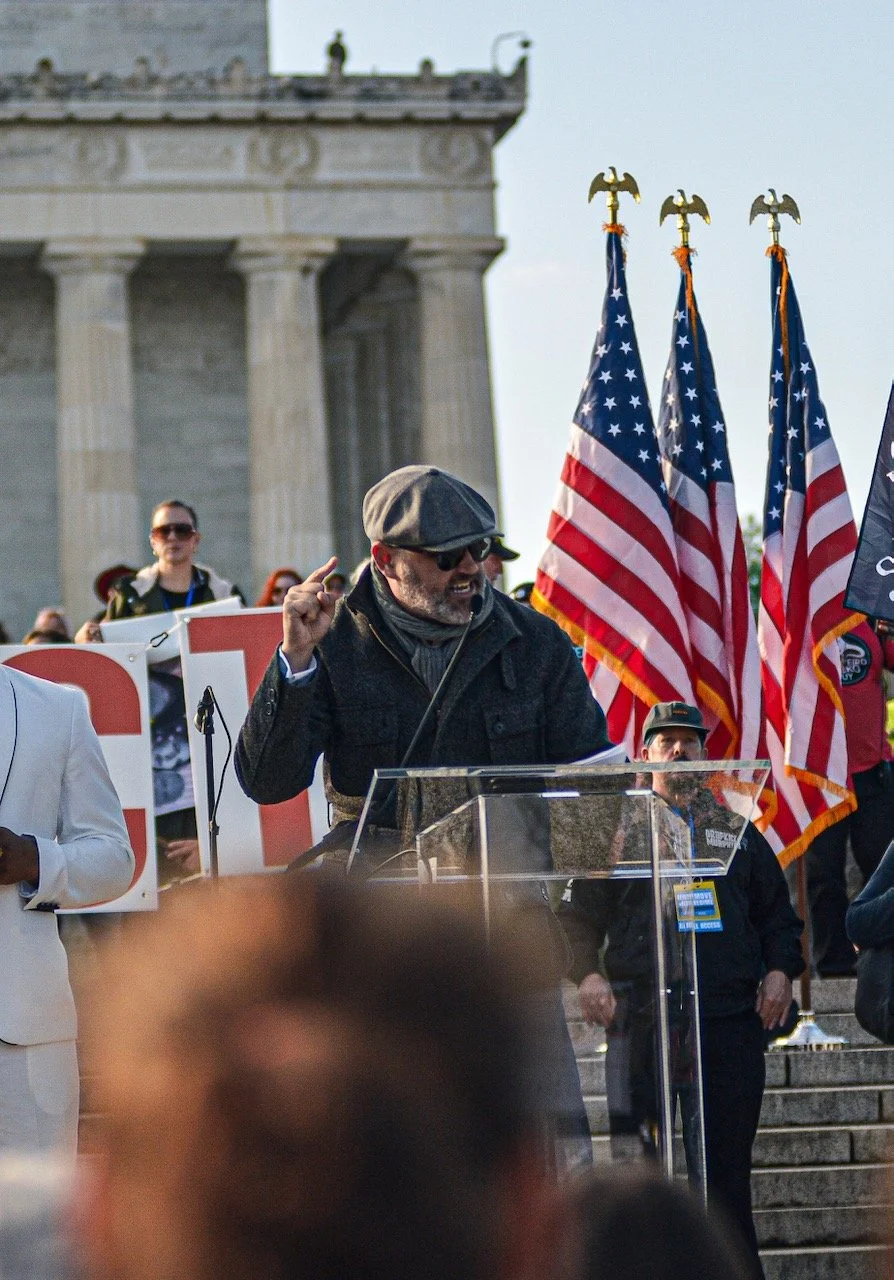
Remove the Regime, November 22, 2025, The Lincoln Memorial. (Photo: Jose Mejia, Owl Media)
The Spanish correspondent found me amid the tear gas.
It was January of this year, on a brutally frigid night in Minneapolis, outside a chain hotel on the edge of the city where the commander of the federal immigration deployment—a man named Greg Bovino—was believed to be sleeping. A few hundred of us had come to stand under his window. I couldn't feel my hands.
A brutal and unlawful federal policy had brought Bovino to Minnesota, but how he chose to execute his mission aggravated the situation substantially: He led with an unimaginable cruelty that had produced the murders of Renee Good and Alex Pretti and had galvanized the city to stand against him. He had forfeited the peace we're all entitled to. His violence demanded self-defense, and the city had responded—not with reciprocal violence, which would have granted him the justifications he wanted, but with presence, with noise, and with the refusal to let him forget, on his way to bed on the final night of his deployment, the incalculable damage he had done during his stay.
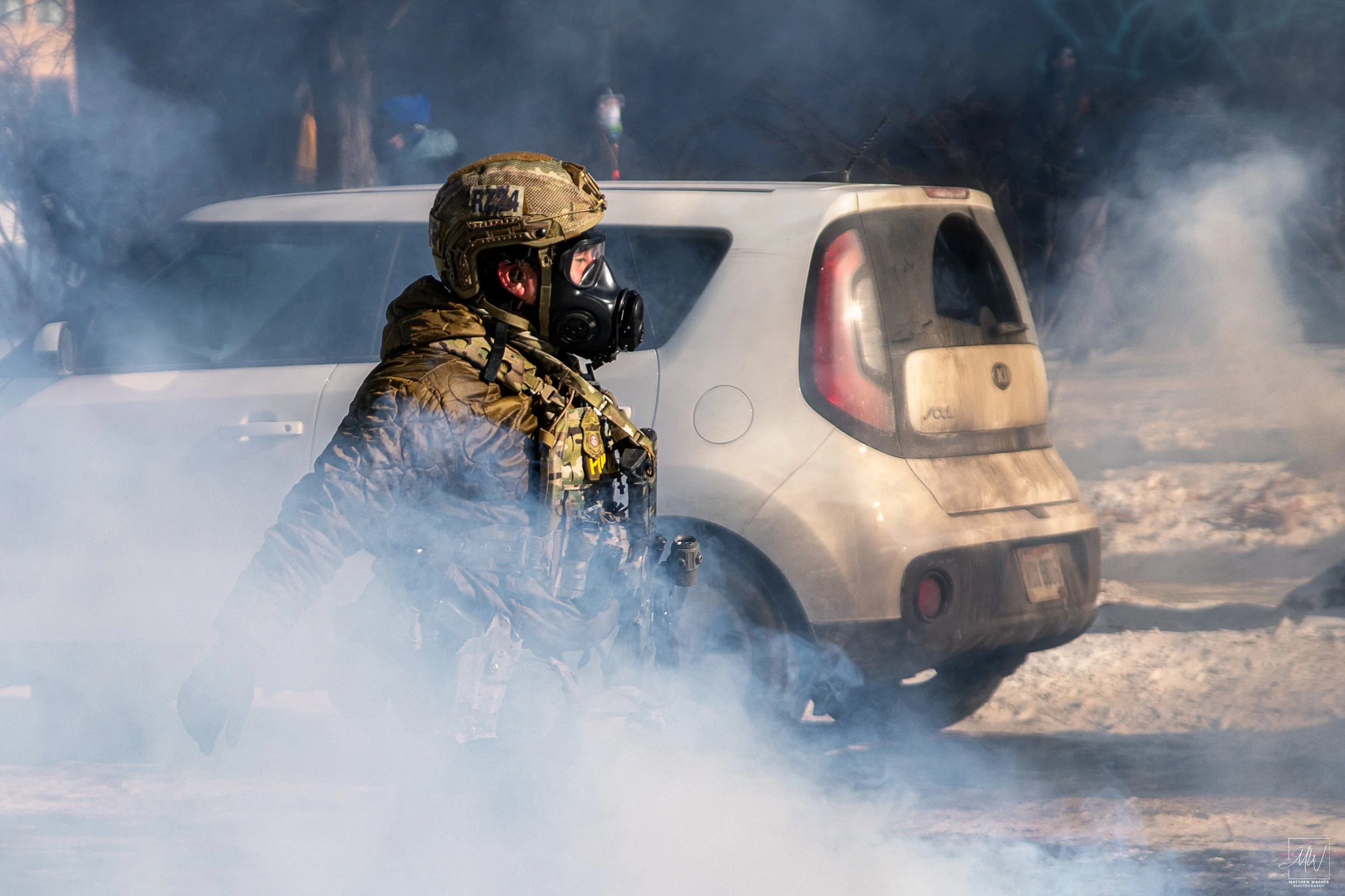
Minneapolis. (Photo: Matt Wagner, Owl Media)
It was a response grounded in a long American lineage, from the Boston mobs through the civil rights movement to the week the Pentagon Papers were published. Several hundred of us in Minneapolis that night were committed to continuing that tradition. The police officers who arrived to disperse us were committed to stopping us, and were equipped with pepper balls, tear gas, and a long-range acoustic device (LRAD).
The conversation I’d been trying to have with the reporter from Diario ABC—Madrid's oldest daily, which had sent its New York correspondent to Minnesota—had to be completed later, by telephone. He had arrived with the kind of questions European journalists tend to bring to American political stories, which is to say the good ones. We had gotten through one and a half of them before the line moved.
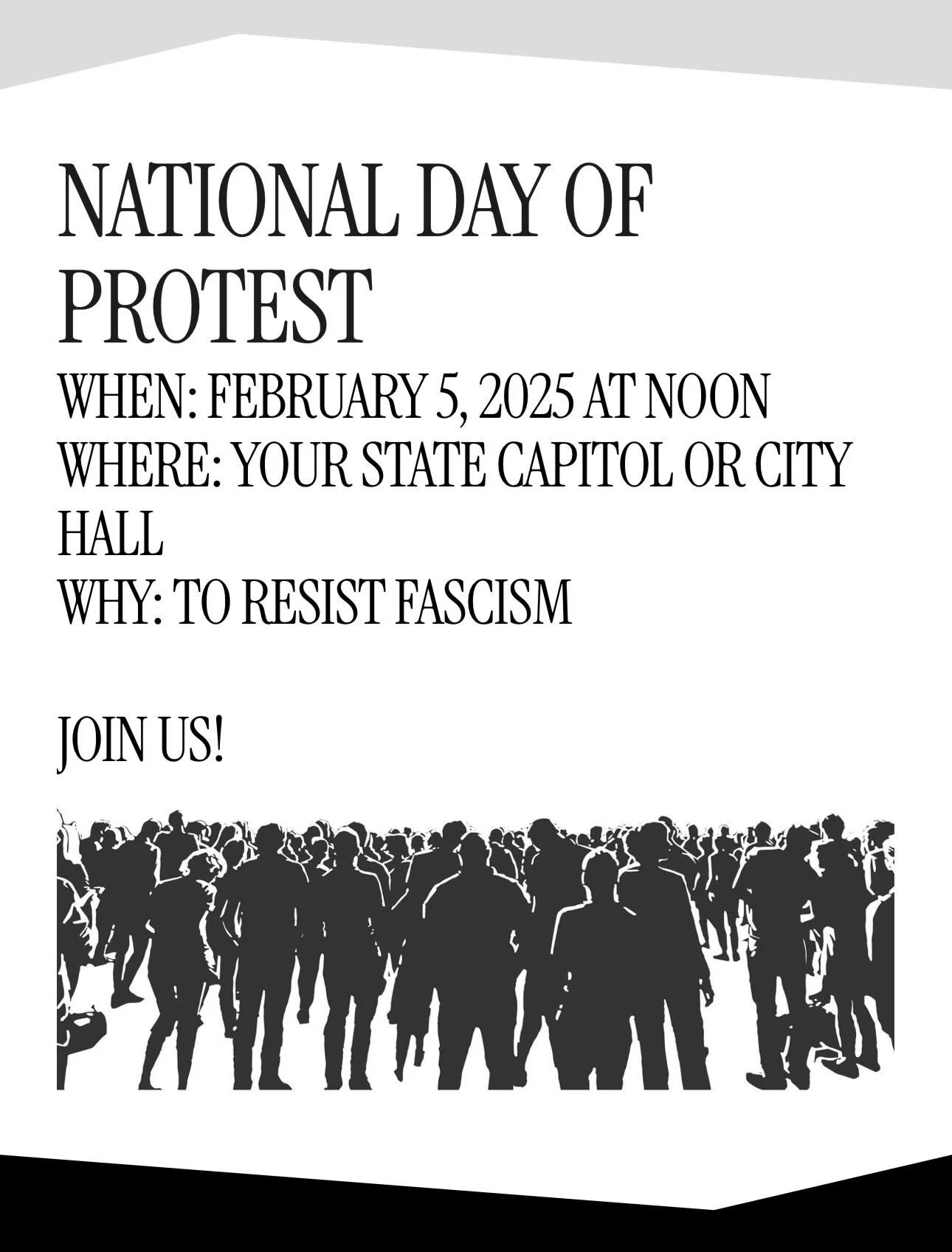
"I launched the movement," I told him, before the police began their approach. The first national call to the streets on February 5, 2025—which I hashtagged “National Day of Protest”—came from American Opposition, the organization I had announced on Threads just ten days earlier.

The first flyer for the first National Day of Protest on February 5, 2025.
I don’t typically discuss the early days of this effort publicly. I generally try to keep my own name out of the story I've been helping to write . But it was cold, the gas was in my eyes, and a foreign journalist had flown halfway across the world to tell the story of the movement. I figured he deserved an answer.
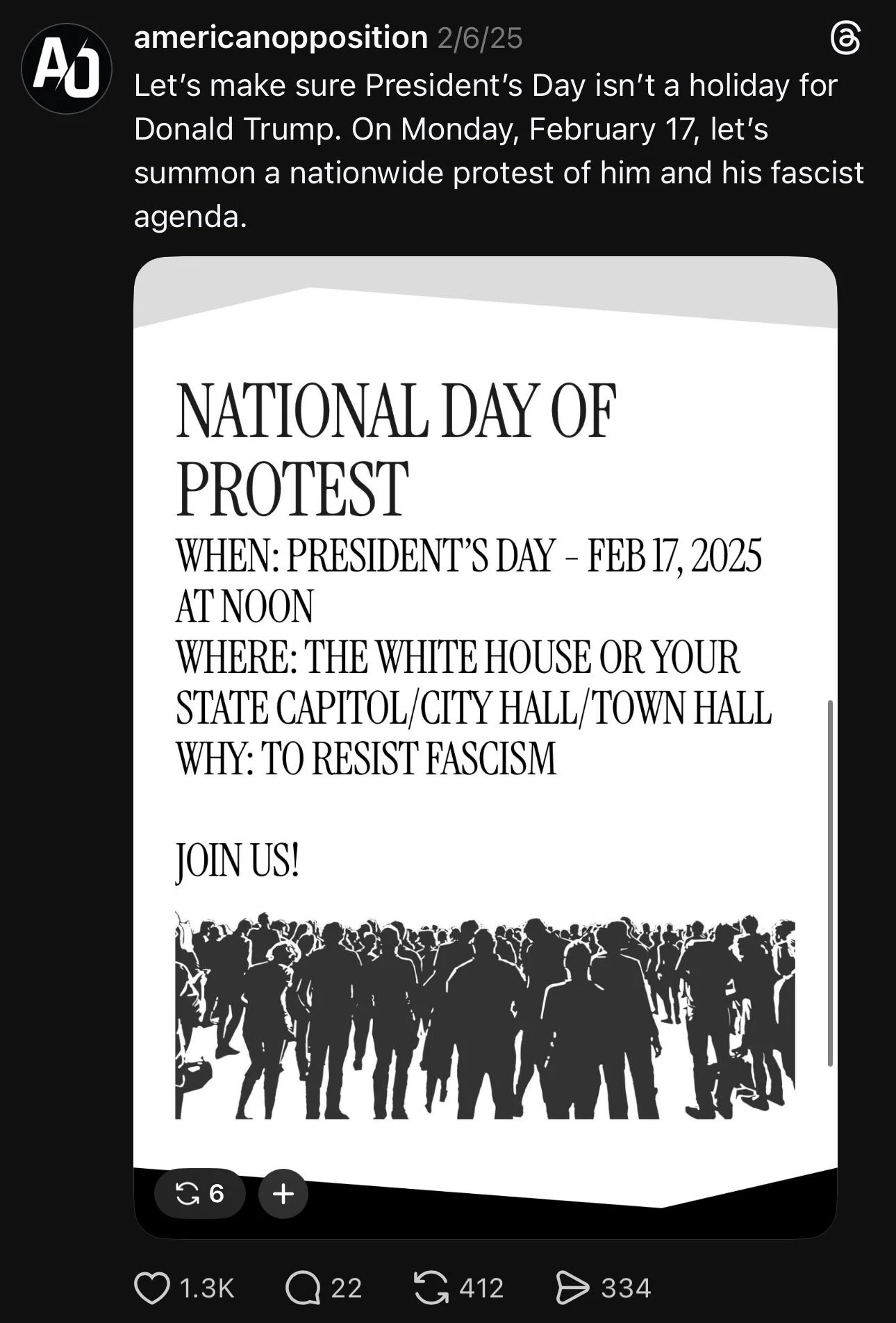
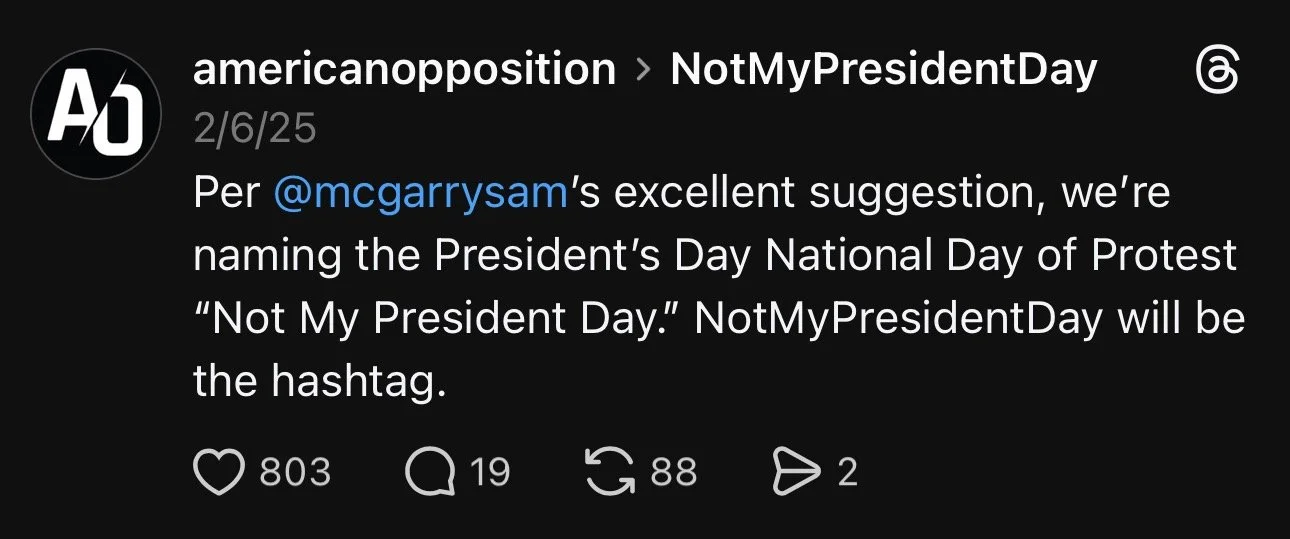
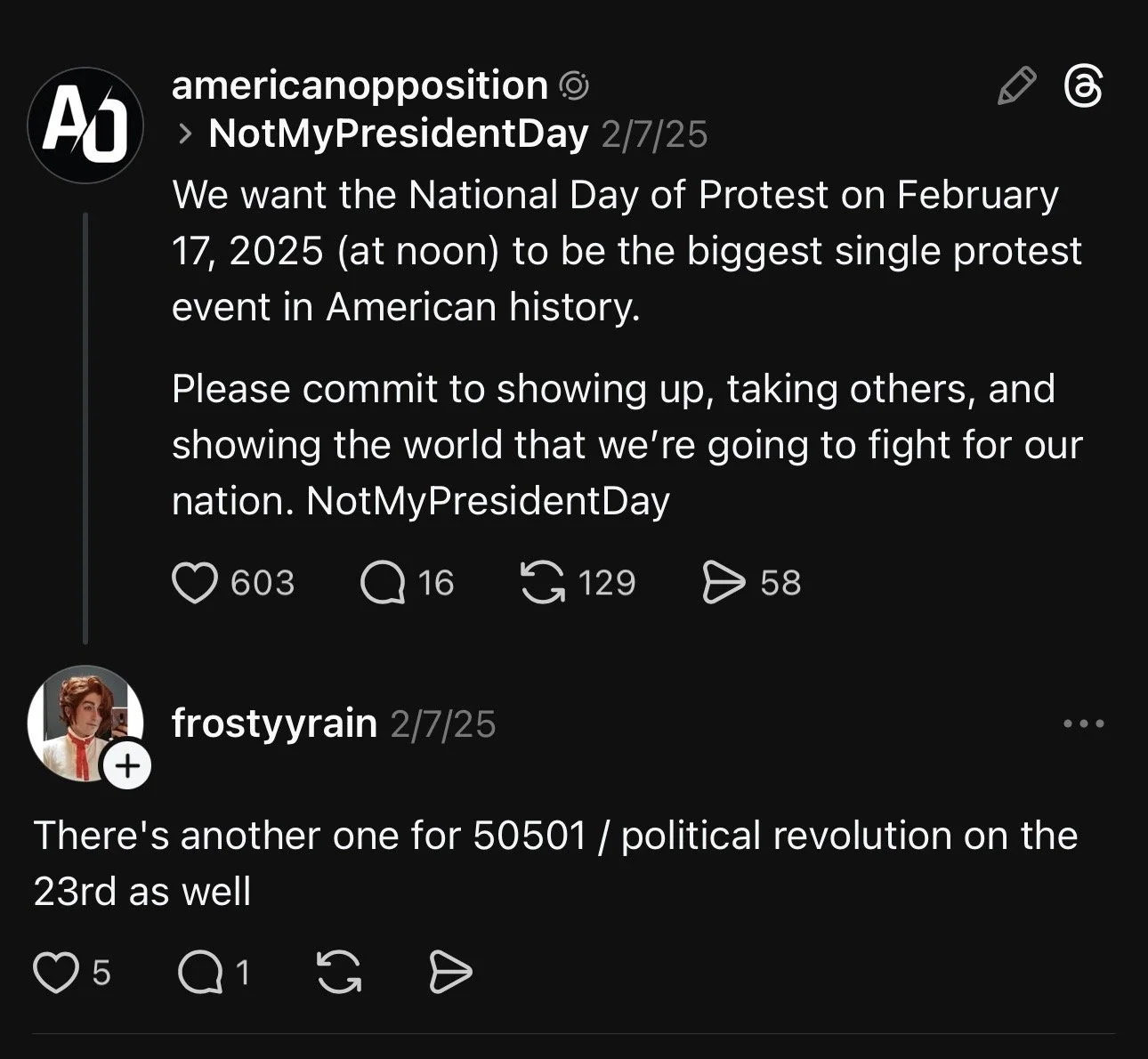
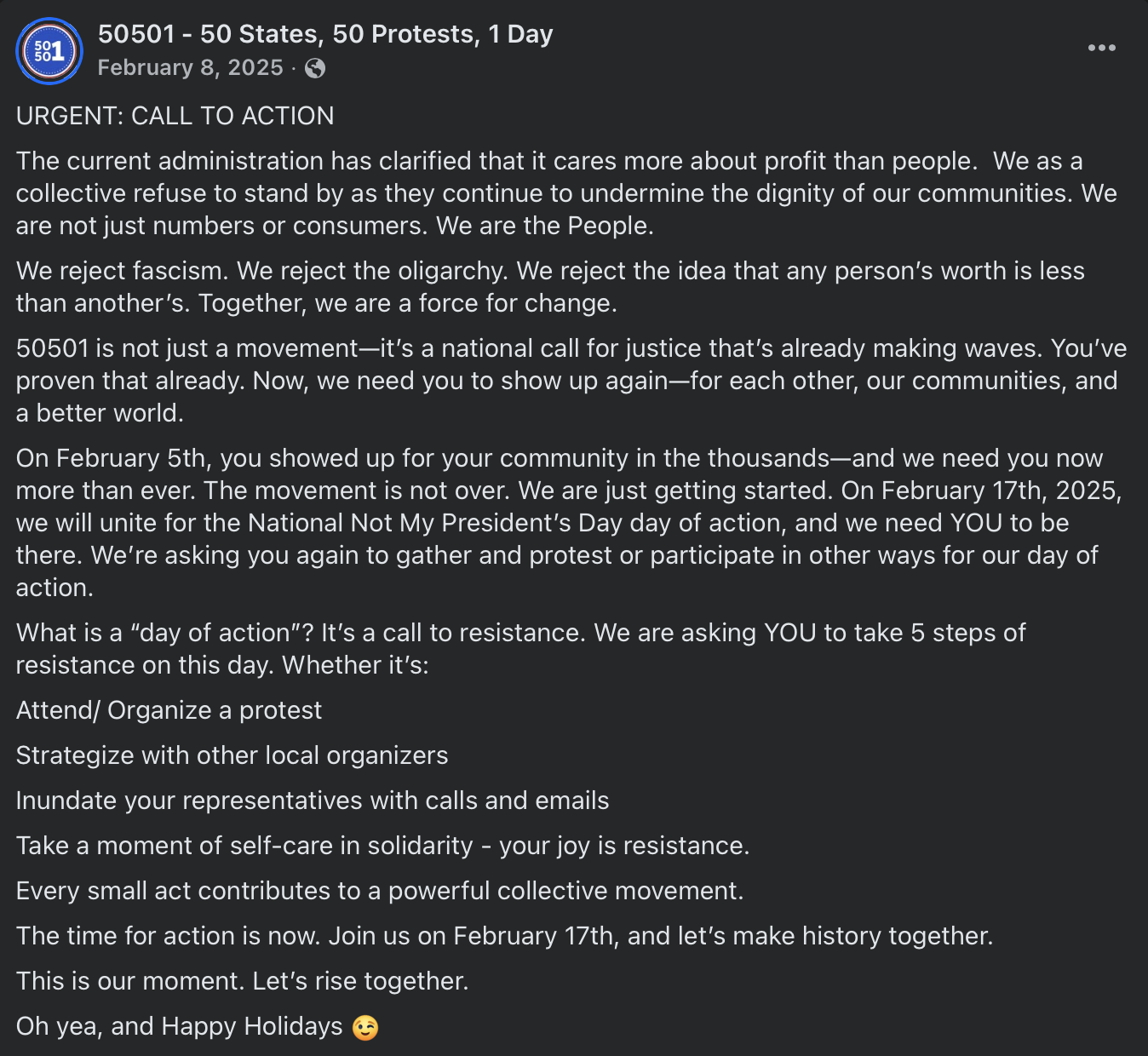
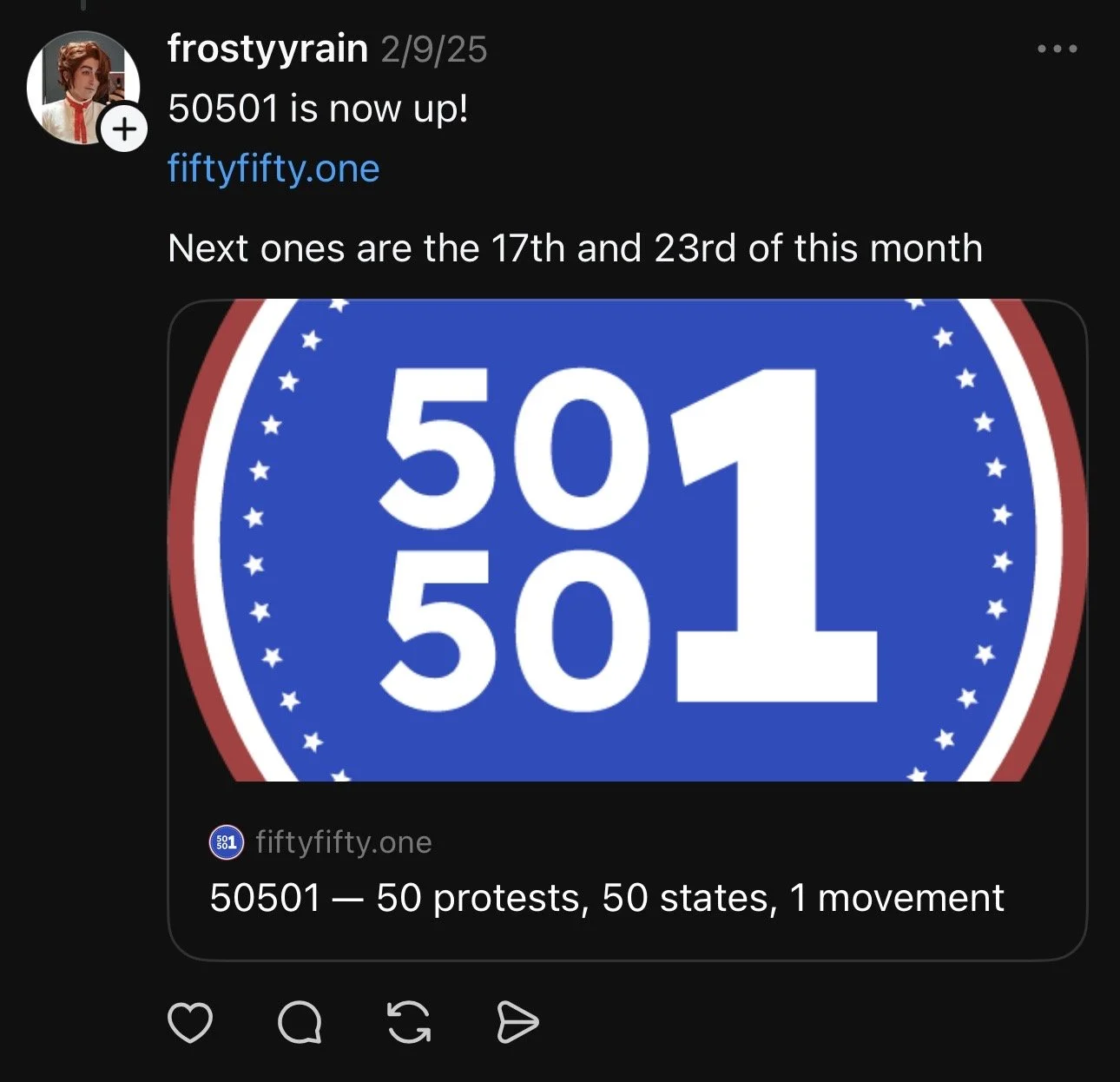
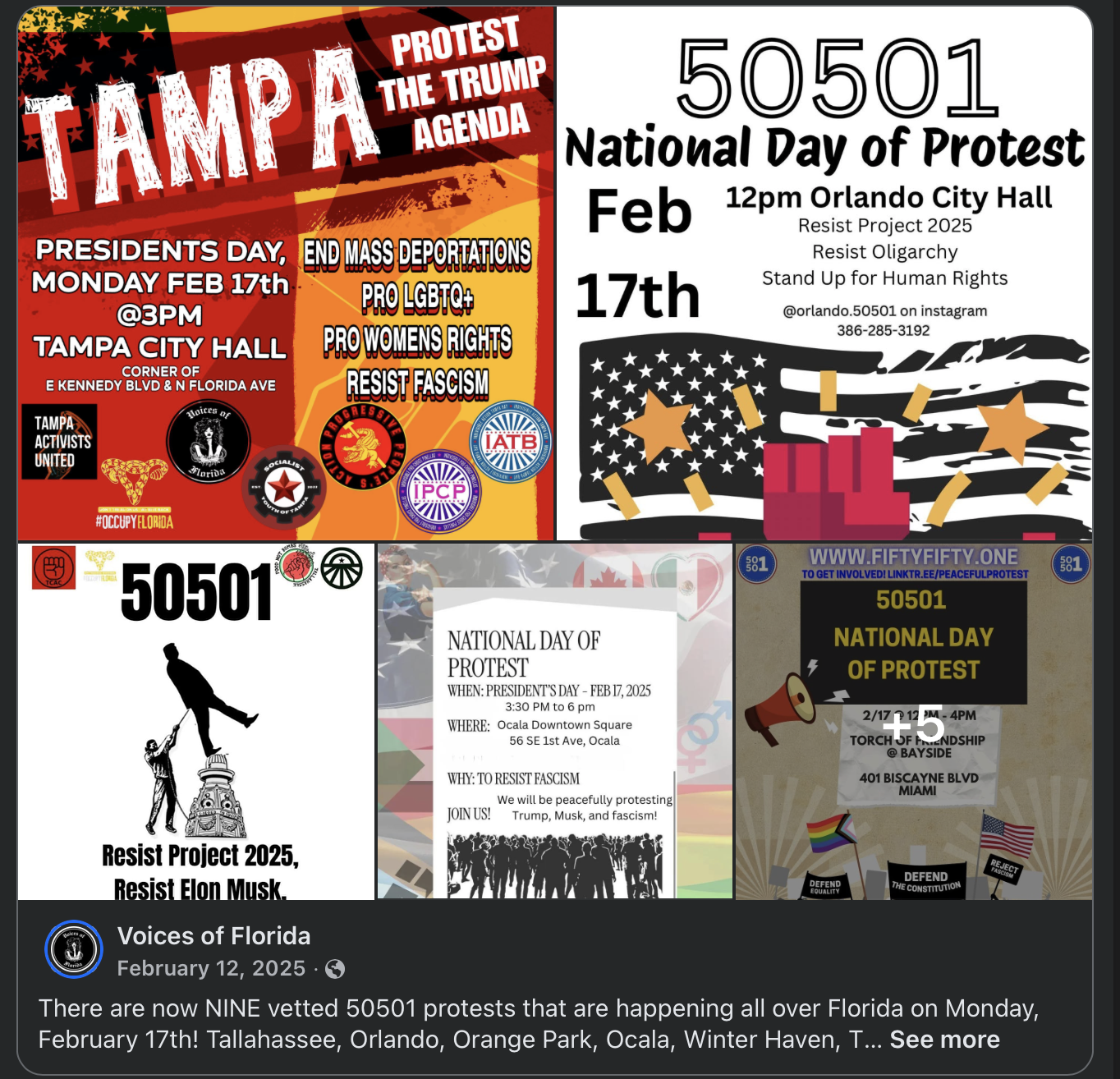

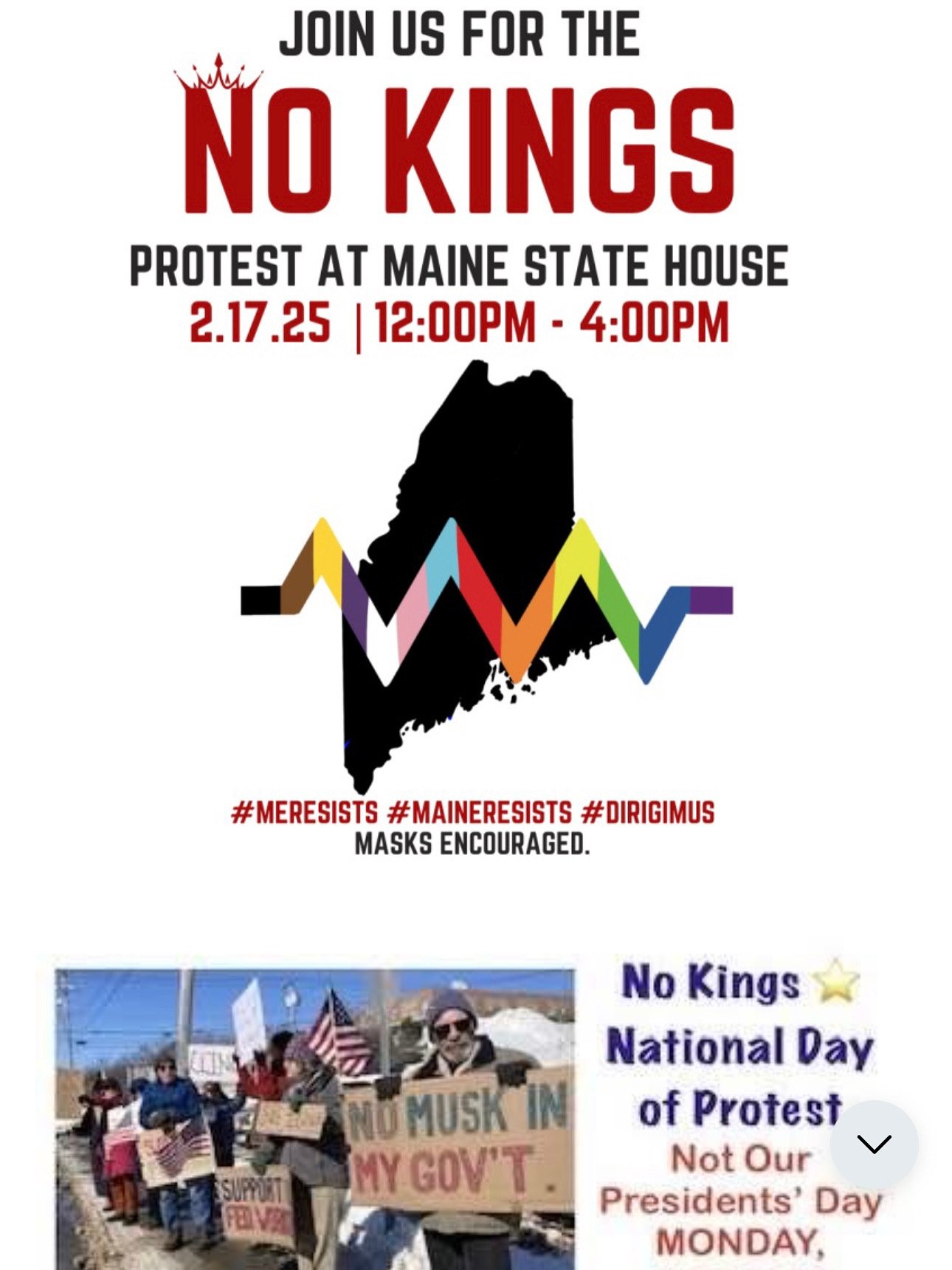
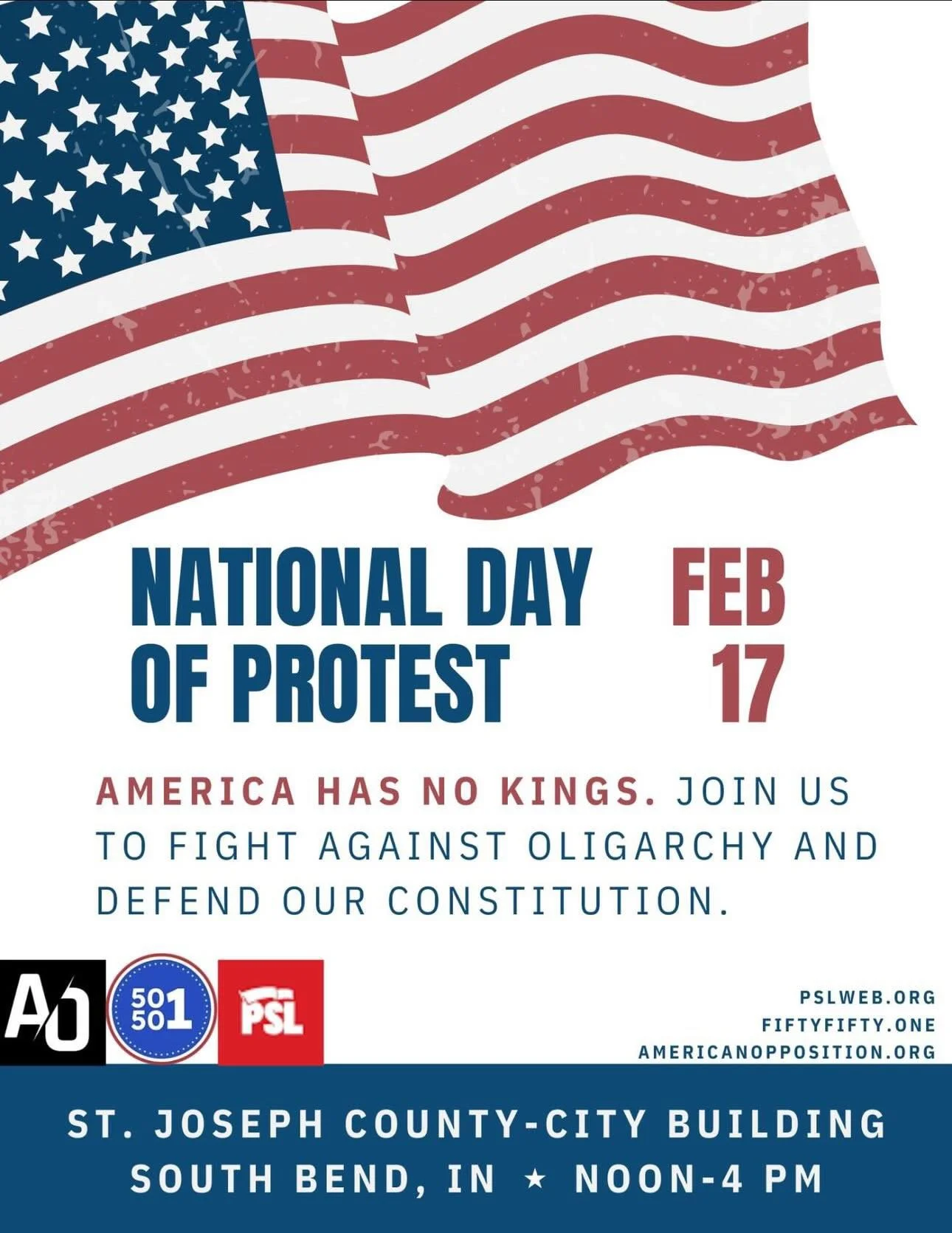
The story of how the first No Kings protest on February 17, 2025 came to be, told in pictures.
He then asked me when I had understood what kind of president Donald Trump would be. I told him I had seen it in the first week—as soon as the first cascade of executive orders rolled out. "The frame had changed," I said. "The fight had to move to the street. The institutional challenge became very serious."
What I meant by that is the argument I want to make here, and I owe you an account of how I came to it—as someone who helped run the institutional response at its highest level in the last election cycle, for the organization TIME would later describe as the center of "the secret bipartisan campaign that saved the 2020 election"; as someone who watched, in the 2024 cycle, the same architecture try the same plays against the same adversary and fail; and as someone whose childhood, in a different country, taught him to recognize a particular silence—the silence that settles in the rooms where decisions used to be made after power stops listening.
This is an account of what I did in response. But every political project is downstream of an autobiography, so I’ll share mine briefly first.
I was born in the Dominican Republic in September of 1980, under the shadow of a president named Joaquín Balaguer. Balaguer was an elected fascist. I use the phrase deliberately, because Americans have a habit of insisting those two words can't share a sentence. They can. They do. My island taught me this before I was old enough to hold a political opinion about anything.
To understand Balaguer, an American reader first must understand Trujillo. Rafael Leónidas Trujillo Molina ruled the Dominican Republic for thirty-one years, from 1930 until his assassination in 1961, in a manner so baroque in its cruelty that writers from García Márquez to Vargas Llosa to Junot Díaz have spent careers trying to describe it and have each admitted, in their own way, that it defies description. Trujillo murdered somewhere between fifteen thousand and forty thousand Haitians in a single week in 1937 on the banks of the Massacre River, sorted by their ability to pronounce the Spanish word for parsley. He renamed the capital after himself. He put his own portrait in every home. He wore makeup and a chestful of medals invented for the occasion. He was killed by men, some of whom he had personally tortured, on a coastal road in San Cristóbal, where my mother was born.
Joaquín Balaguer was Trujillo's puppet. He was also one of the most gifted political operators the hemisphere has ever produced. After the dictator's death, after the civil war, after the American invasion of 1965, Balaguer ruled the country for twenty-two of the next thirty years, mostly through elections he rigged with an elegance Trujillo would have admired. He was polite. He was literate. He wrote poetry. He went blind. He died in office. He produced, through a patient application of terror distributed thinly enough not to draw the attention of the international press, a national silence so durable that my generation inherited it without understanding it.
What I remember first is that silence. Not the silence of open fear, though there was plenty of that. It was the silence of a people who had collectively decided, without a vote ever being taken, that being quiet was how you stayed safe.
At fifteen years old, I published the Listín Diario, the largest newspaper in the Caribbean, on the Internet. My proximity to politics was multilateral: My father was an oligarch operating within that space at the highest levels, my colleagues were the journalists covering it, and the streets of Santo Domingo were saturated with it.
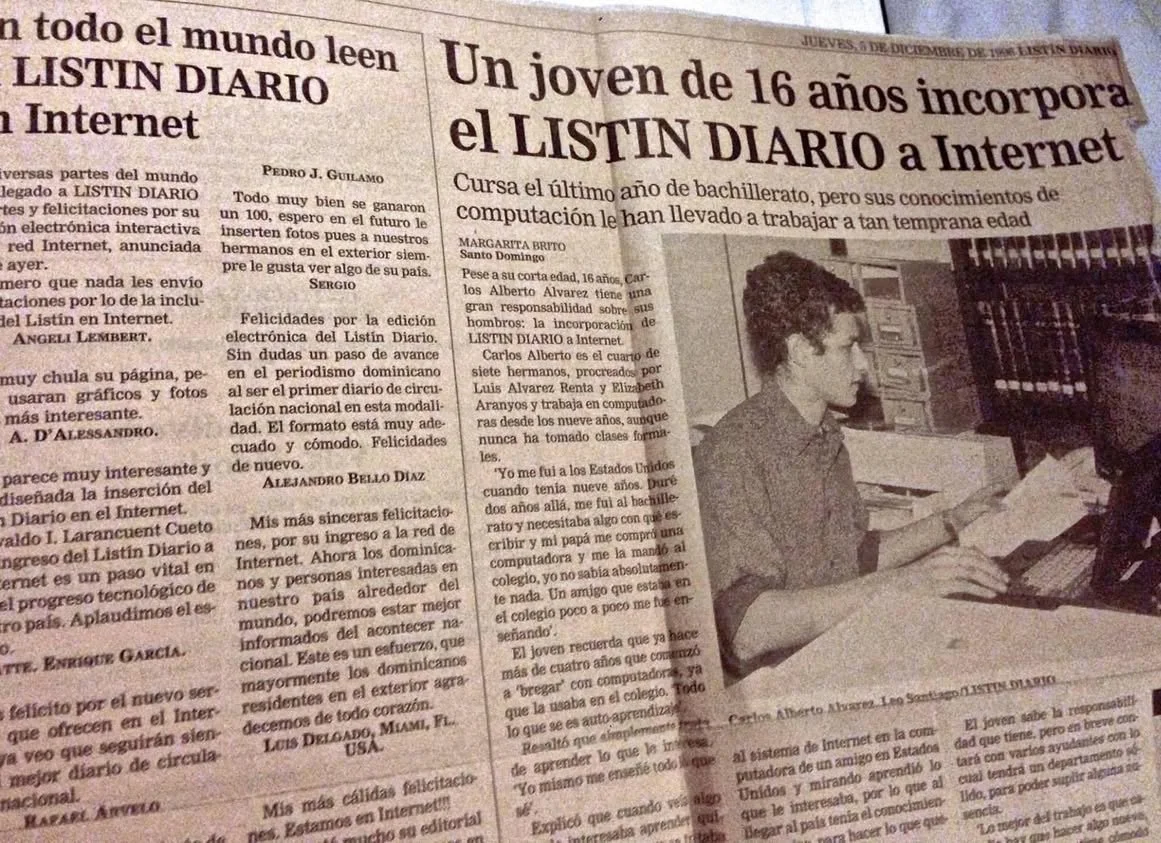
Publishing the Listín Diario online in 1996.
I learned many things as I watched Balaguer, Juan Bosch, José Francisco Peña Gómez, Jacobo Majluta, and later Leonel Fernández battle for political supremacy—that institutions could look intact and be hollow, that laws could exist on paper and not in life, and that the word democracy is routinely used by governments that would prefer you not examine the situation too closely. I also learned the particular tingle at the back of the neck when a conversation at a dinner table goes somewhere it shouldn't go, and someone at the table changes the subject on behalf of everyone. The entire country ran on that tingle.
My father, in time, became a political prisoner in a banking scandal—wrongfully, it has since been established—and I watched power, at close range, do what power is willing to do when it decides a person is inconvenient. The government wanted what he had, and after they asked him for it and he refused, they manufactured a charge. I don’t want to dwell on it, but it’s as simple as this: The president of a bank was charged with eleven criminal counts, including one for money laundering. My father was accused of one charge—accessory to money laundering. The only charge the president of the bank was acquitted of was money laundering. My father was still found guilty of being an accessory to it. The charge was changed during sentencing to resolve the discrepancy. He spent seven years in as a political prisoner, and they took what they had originally wanted. The Wikileaks documents later showed that the American embassy in Santo Domingo knowingly threw him under the bus in order to protect the perceived accountability the trials had delivered.
Despite my lack of a relationship with my father, I learned a lot from his experience.
I came to the United States at nine years old, first to the Palmer Tennis Academy for middle school, then to Kent School in Connecticut, which kicked me out, before completing my first American tour at the Ojai Valley School in California. I returned to the Dominican Republic for my junior and senior years of high school and published the newspaper on the side. I went to college at the University of Massachusetts at Amherst but largely lived at the Carlyle Hotel in New York thanks to a family arrangement. After college, I moved to Los Angeles, where I worked as an actor and writer. I then moved to Monaco for three years. My uncle was Oscar de la Renta, and the family name coupled with my own social capabilities opened doors to the rooms where American power and European culture collide.
In the years that followed, I expressed myself fully: I drove a seven-horsepower motorized rickshaw four thousand three hundred kilometers across India for a children's charity. I drove a Smart car through twenty-two countries for UNICEF. I worked in Beirut during active fighting between Hezbollah and Lebanese government troops, negotiating with the WHO, the Lebanese Red Cross, UNESCO, and the Ministry of Health to install a children's oncology wing at the Rafik Hariri University Hospital. I oversaw the construction of a school in Guinea during an active coup d'état. I saw the violence in Congo and the Russian invasion of Georgia firsthand. I completed the Ferrari Pilota Program and partied in Ibiza and St Tropez.
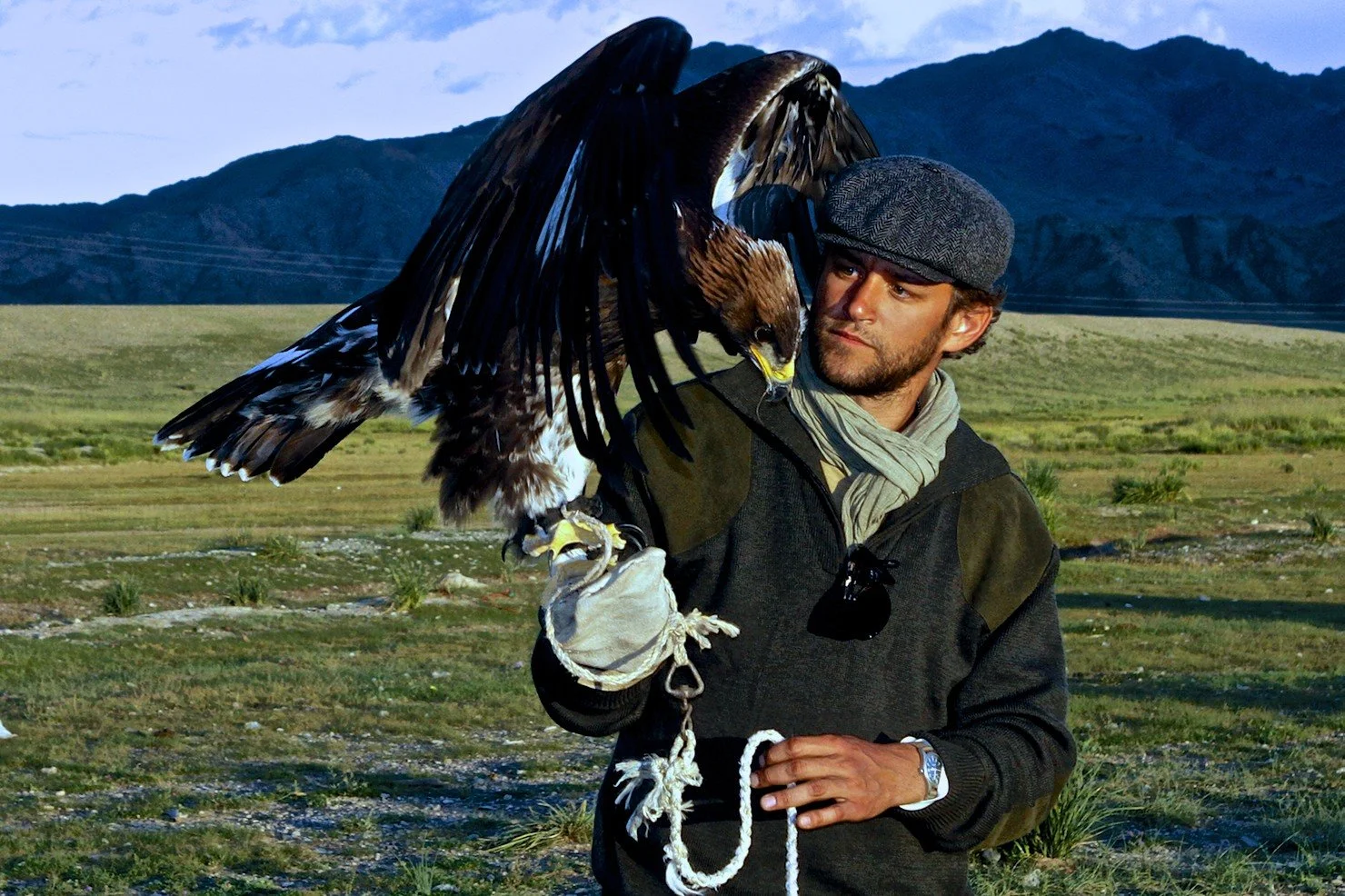
Mongolia. (Photo: Benjamin Hall)
Then, in the spring of 2008, I got an early morning phone call from a private banker in Monaco telling me I had lost everything I owned to a combination of Bernie Madoff and the financial crisis. That was the first of what would turn out to be two major financial collapses.
After the crash, I went to Washington, DC for three years and worked at the Department of Defense in the Obama administration on end-of-war planning for Iraq and Afghanistan while completing my master’s at George Washington University in the evenings. Then back to New York. Then another collapse.
Then I moved to Boulder, Colorado, to try to write a book, and picked up a job driving a taxi. I was so tired at the end of each shift that my body would tremble. Two people, over the course of a year, defecated in my cab.
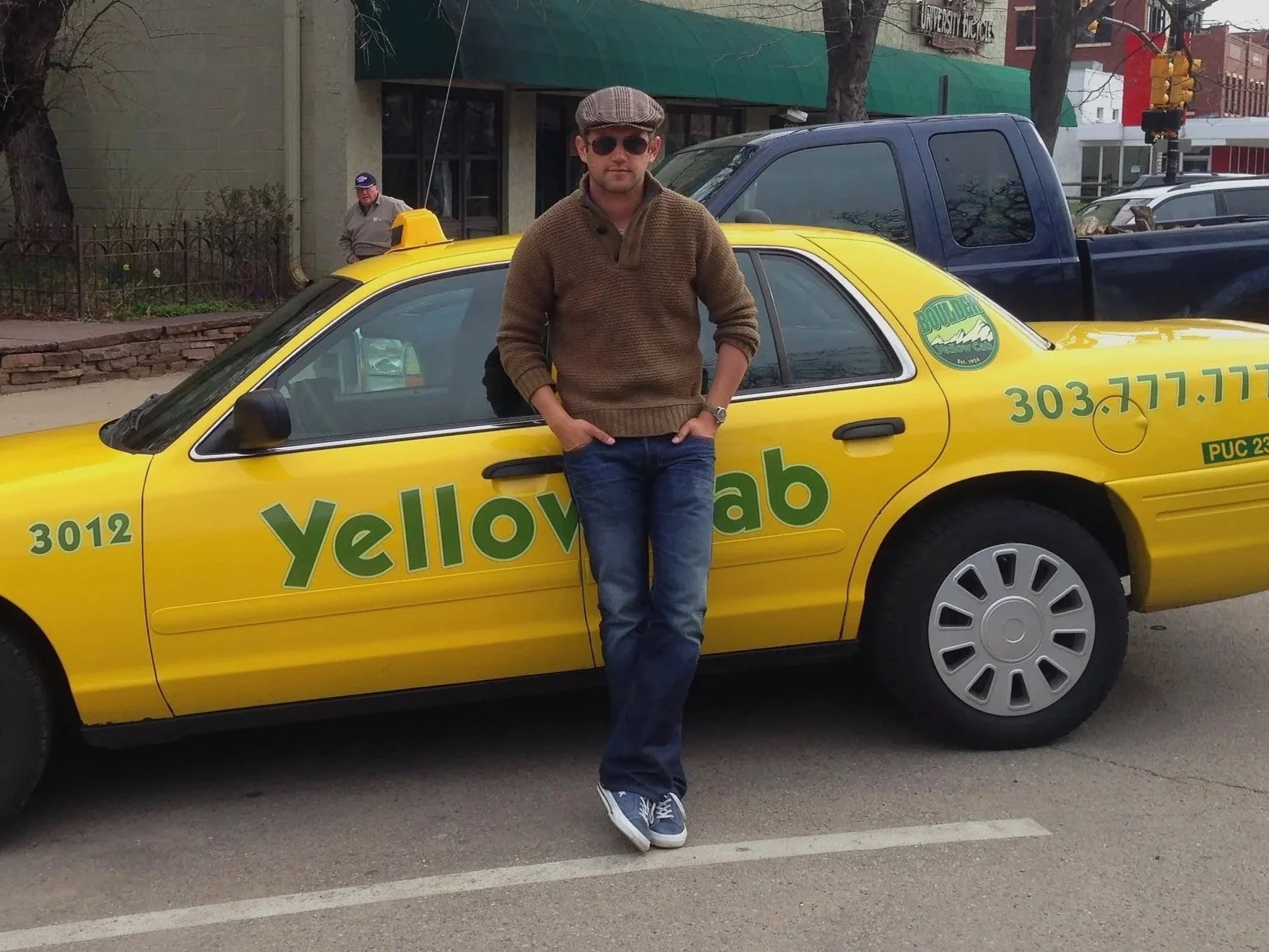
Driving a cab in Boulder, Colorado.
I ended up driving 400,000 miles in three years and turning the taxi job into a transportation company that has become one of the most respected ground and air operators in the state. I learned something in the building of it that the pro-democracy establishment I'd later work for has somehow failed to learn: That the machinery that keeps the world moving isn't abstract. It's made of particular people doing particular things on particular days, and it responds to pressure applied at particular points, and when it stops responding, you need a new machine.
I also learned something the establishment couldn't have learned, because they hadn't lived this way—that a person who has spent time in the rooms where wealth concentrates and has also spent time driving strangers home for minimum wage can see the whole country at once, and that the distance between those two places isn't nearly as great as the people in the first one have convinced themselves it is. Most of the work I've done since has been a consequence of that recognition.
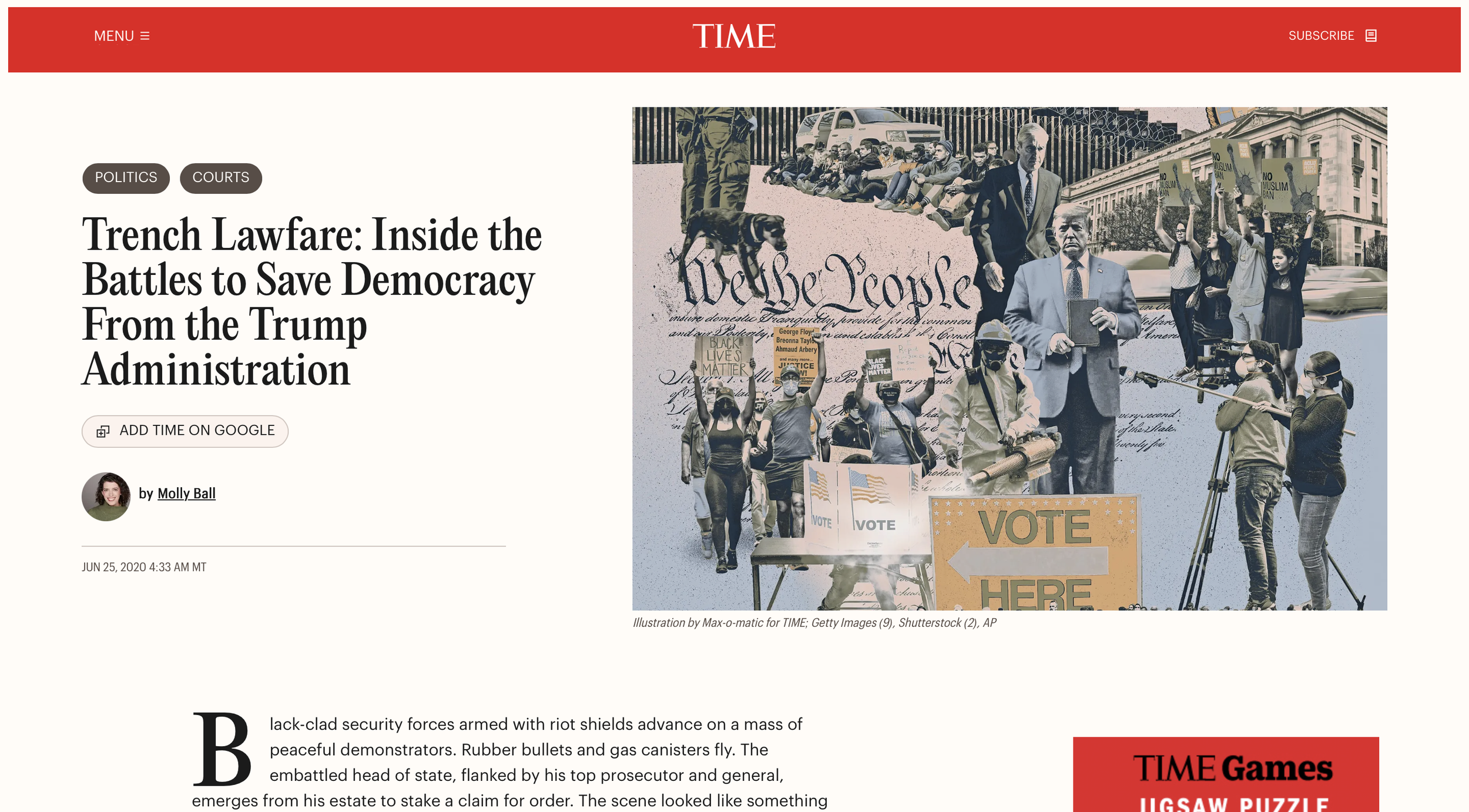
In 2020, and again in 2024, I led strategic communications efforts for the most-covered political nonprofit in each cycle—Protect Democracy first, and then the American Sunlight Project.
At Protect Democracy, between March 2020 and June 2021, I coordinated—along with a team of remarkable lawyers and lobbyists—some of the most consequential communications campaigns of the cycle.

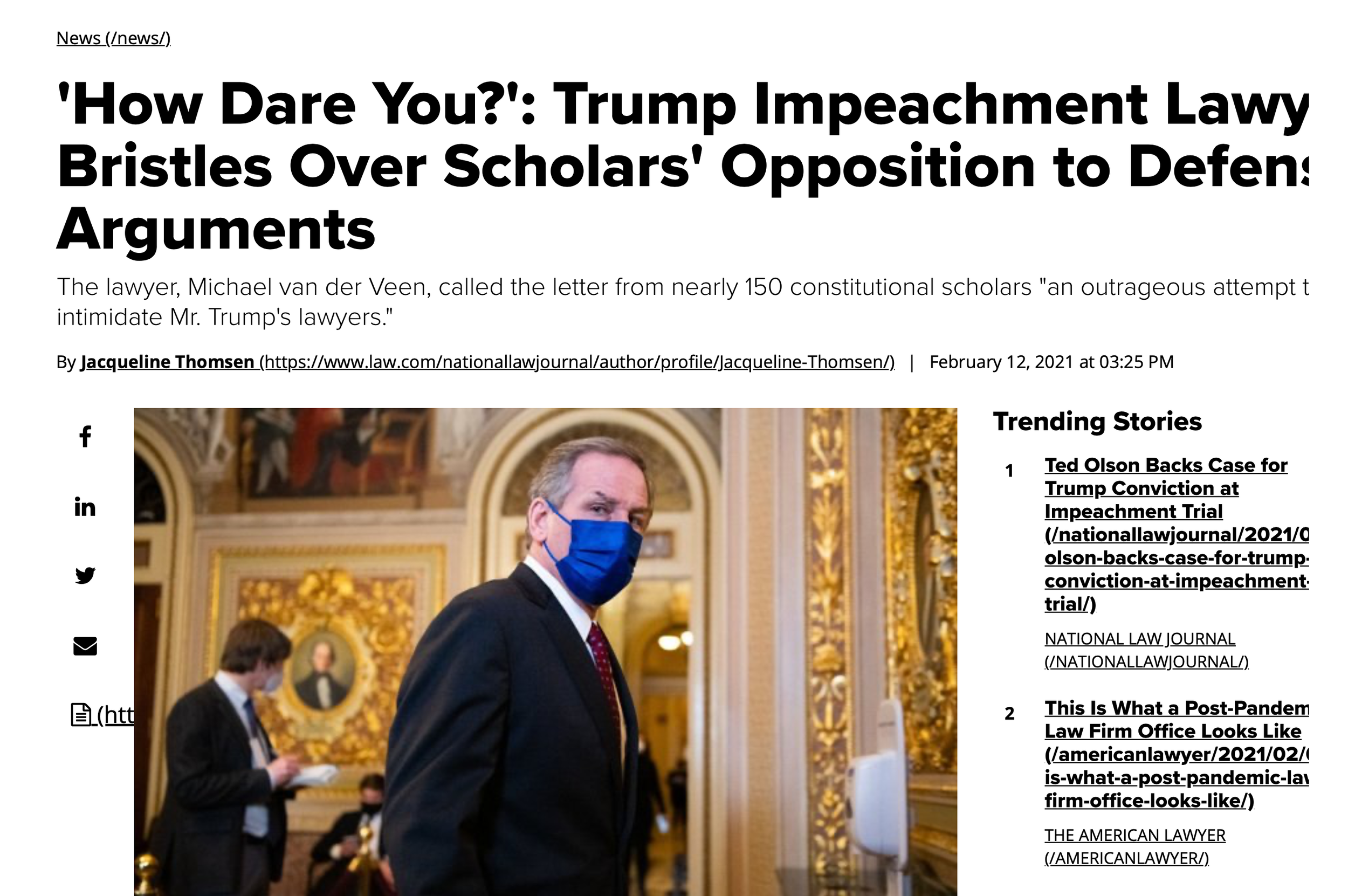
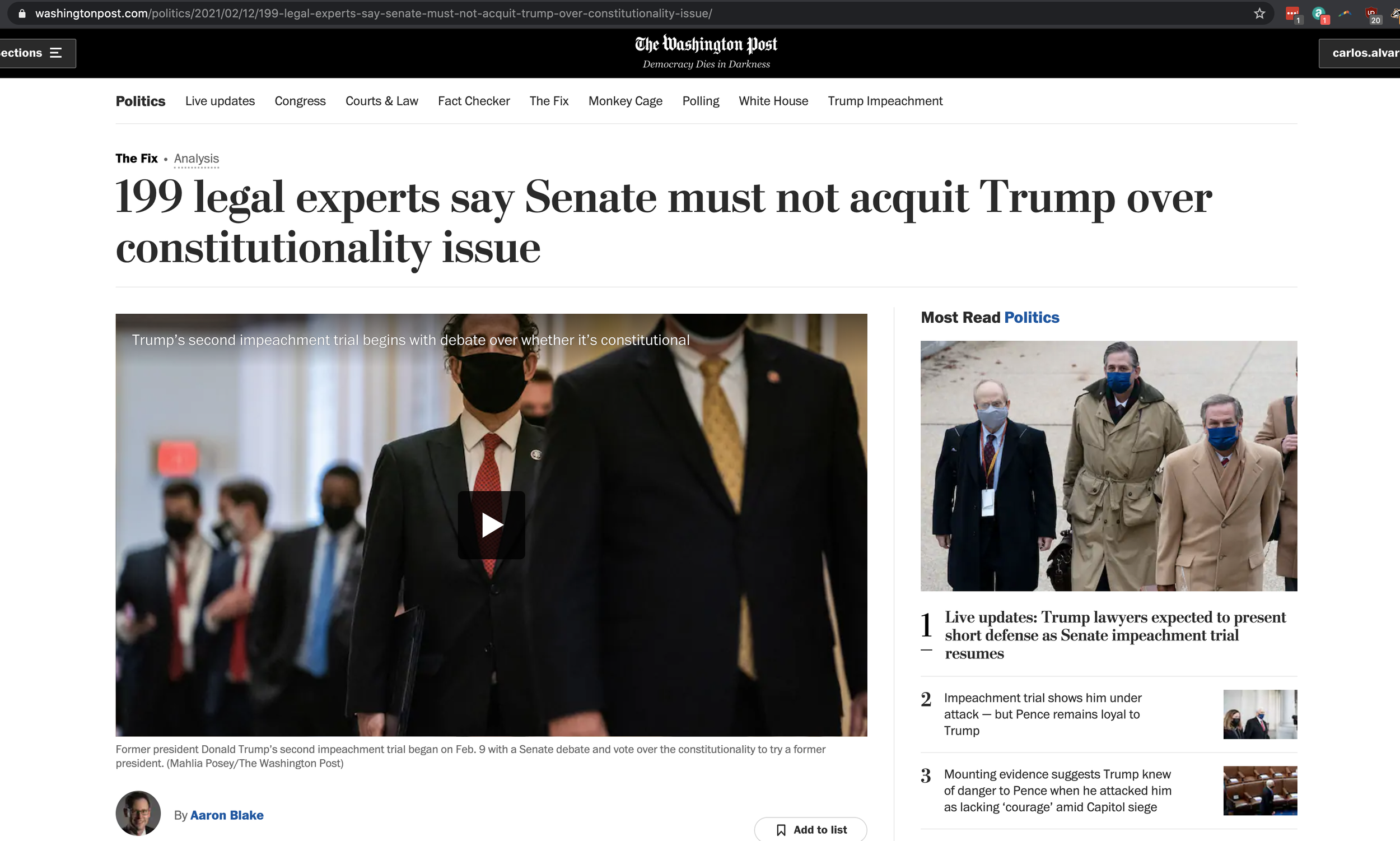
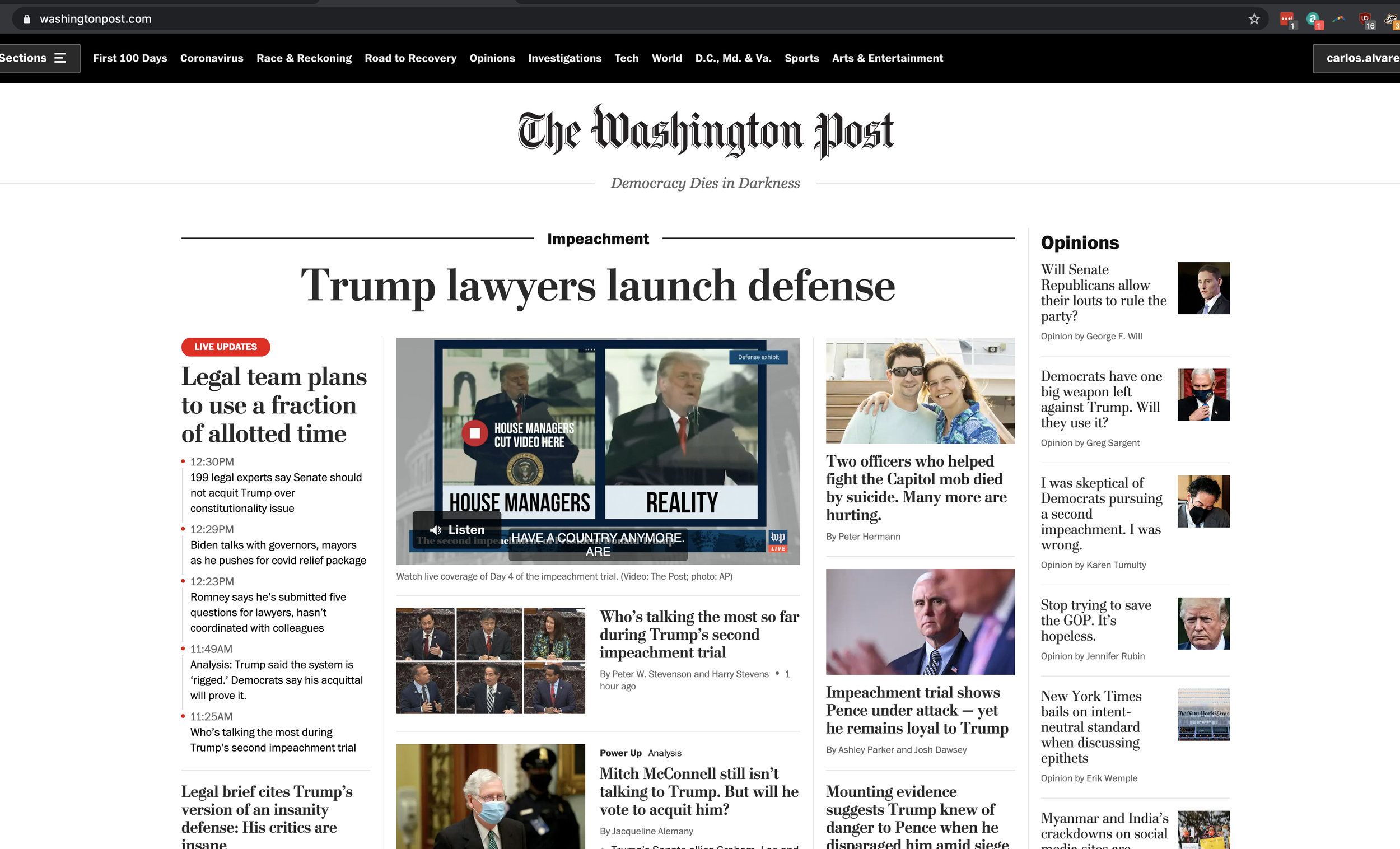
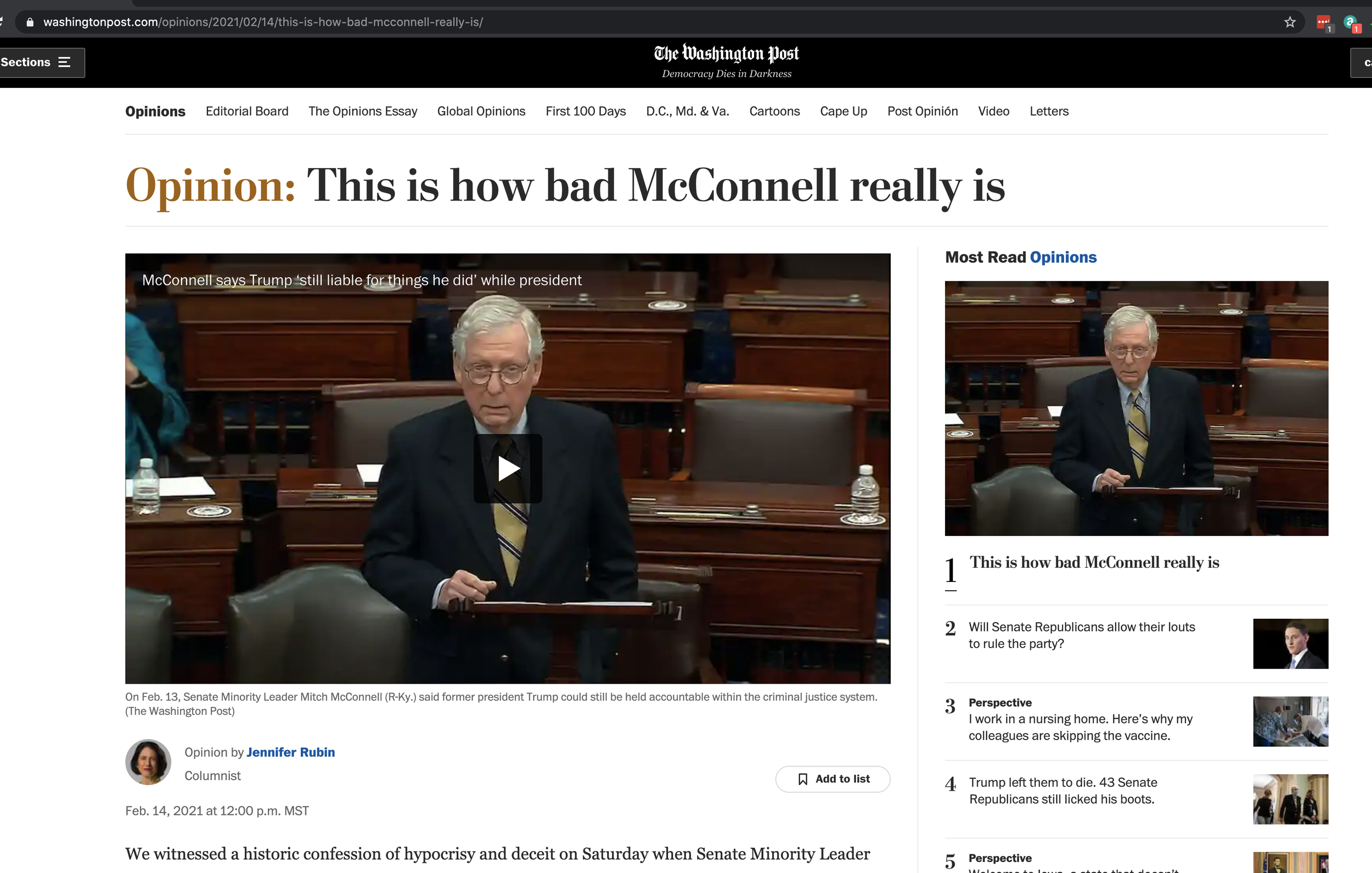
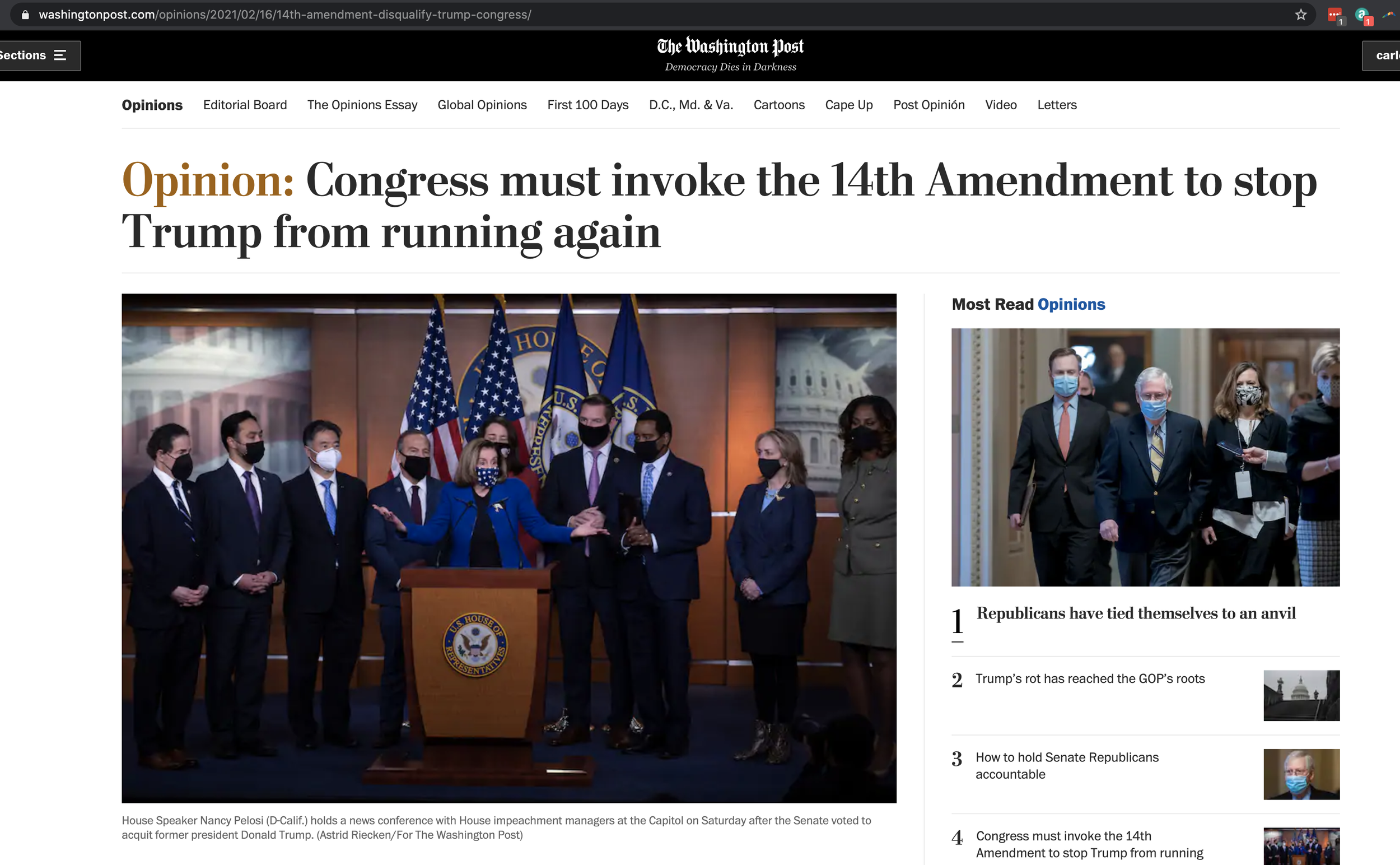

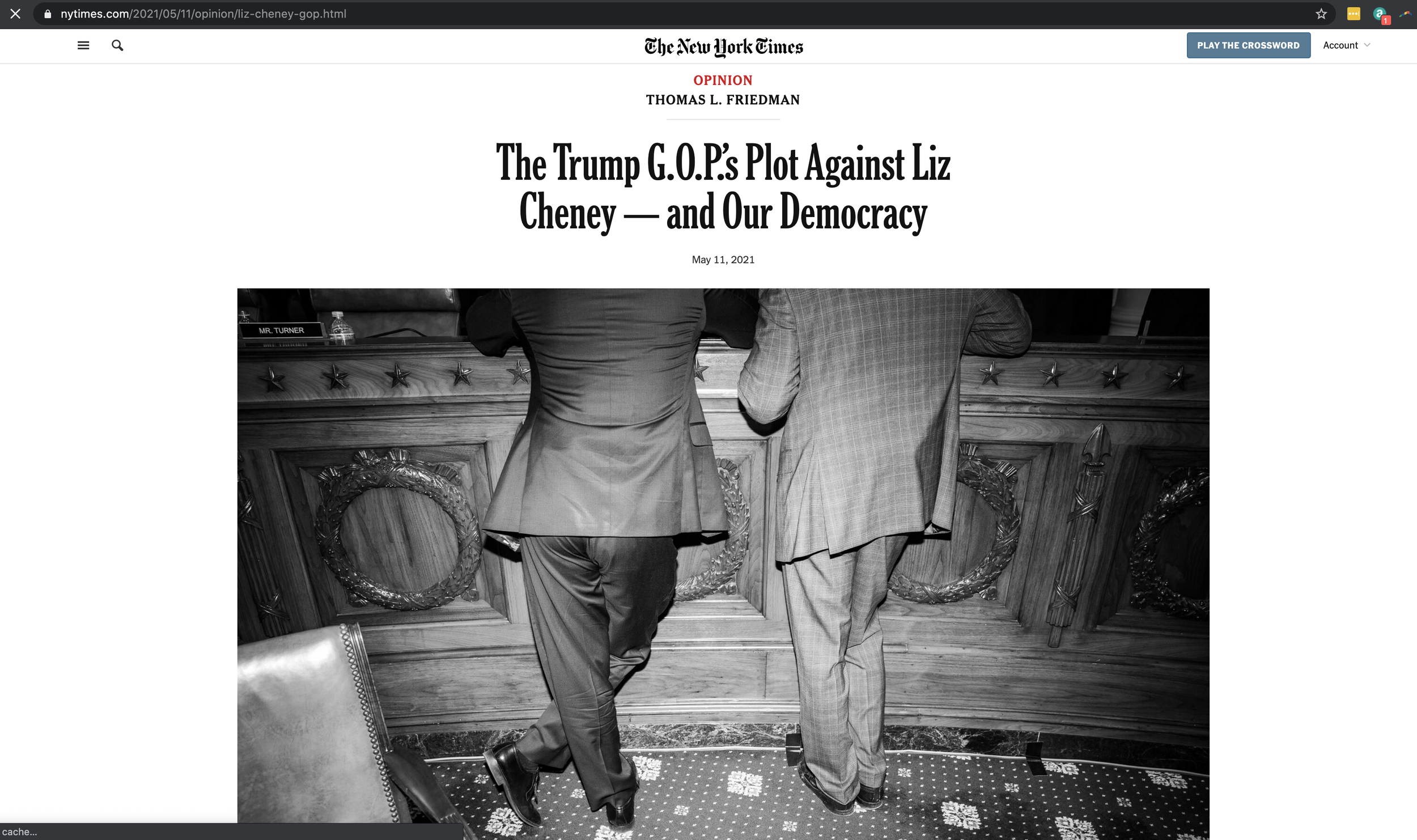
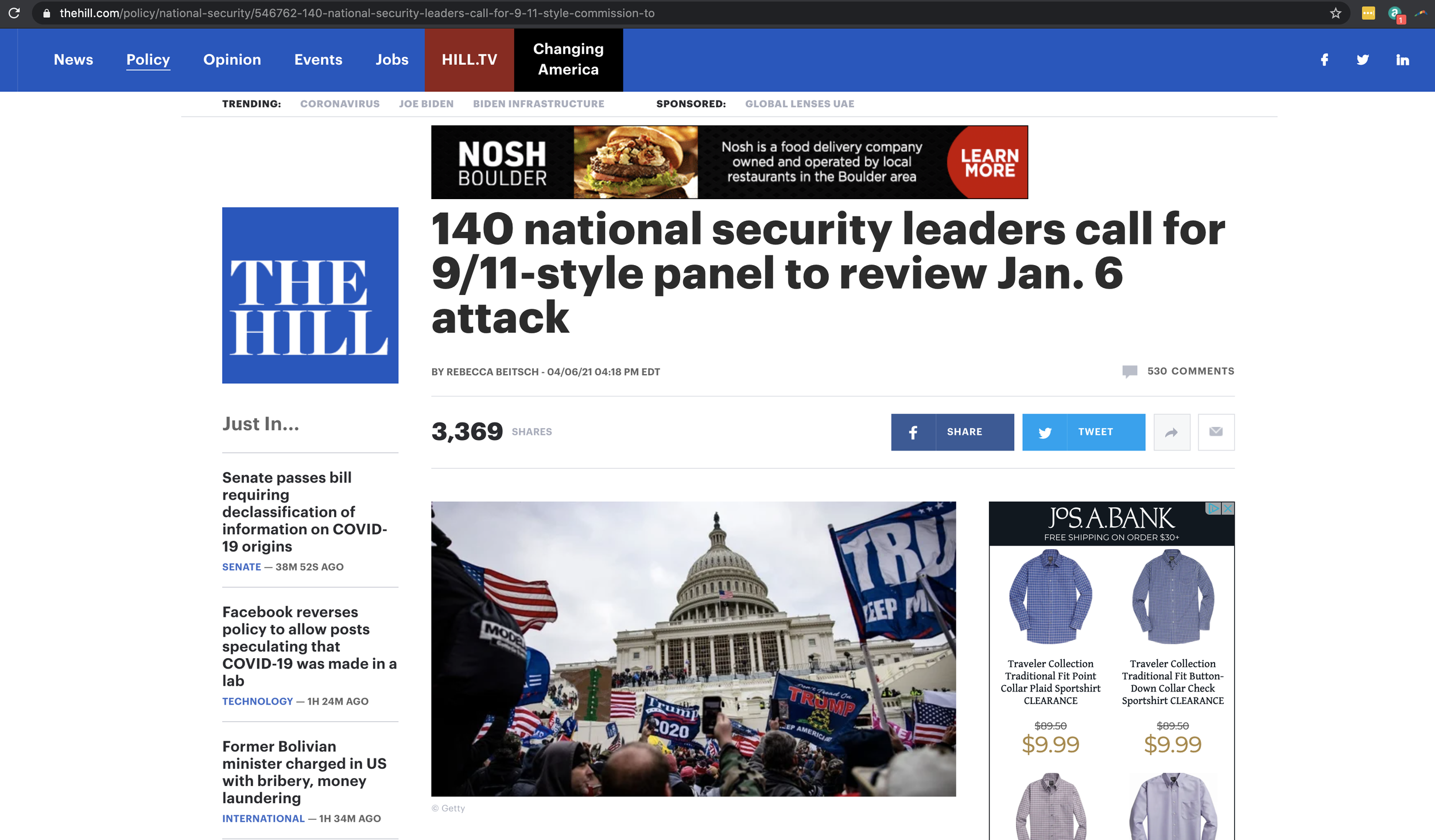

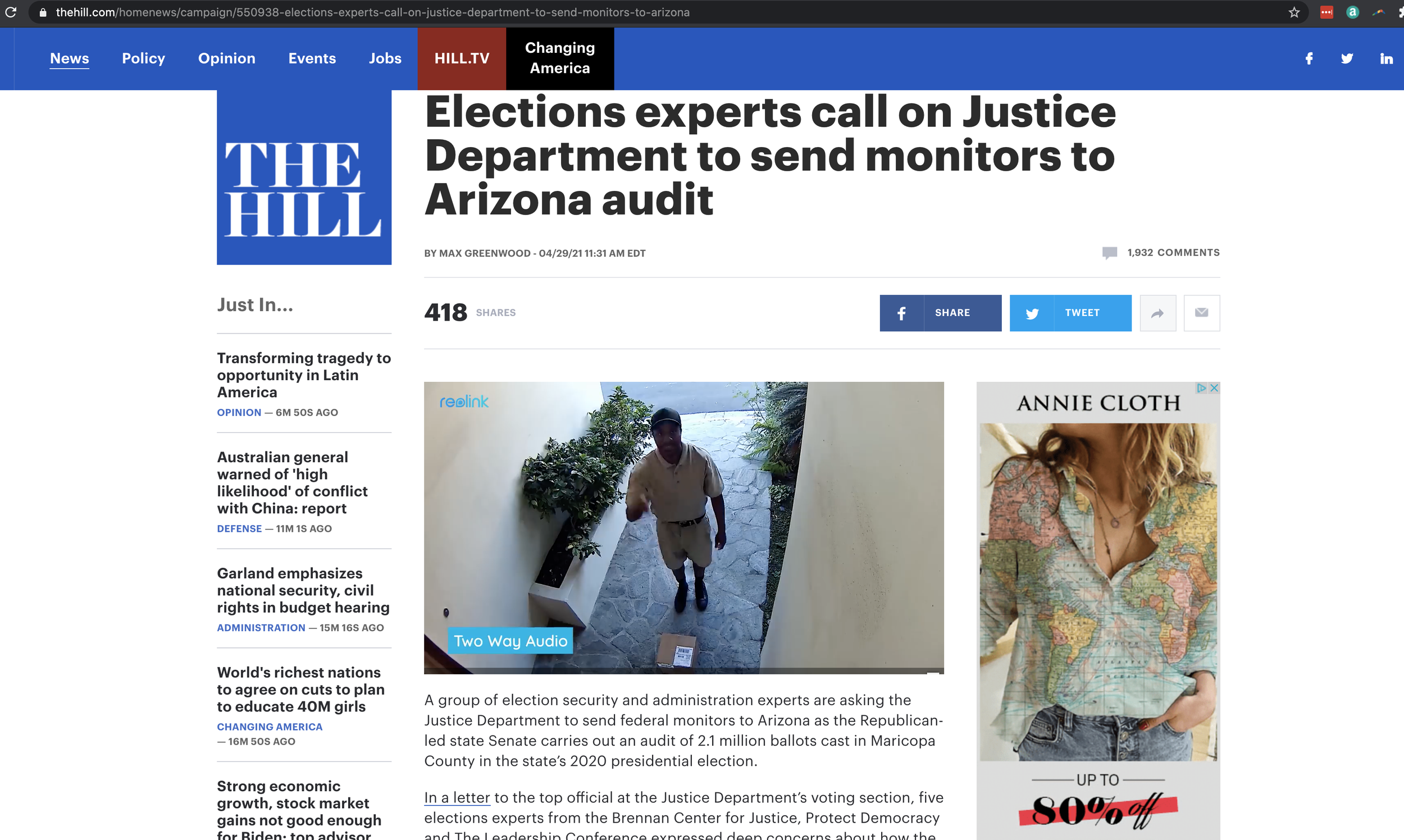
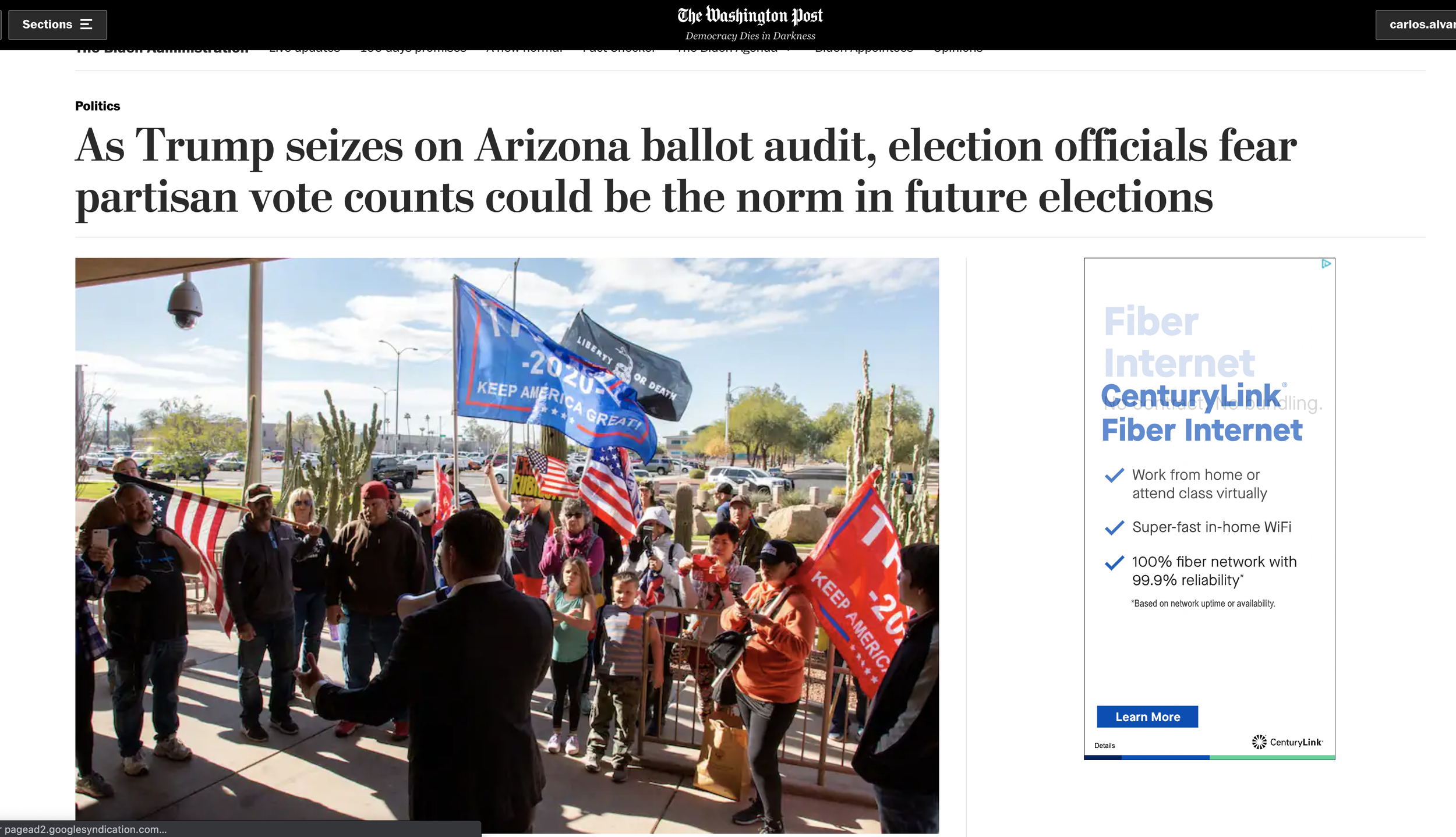
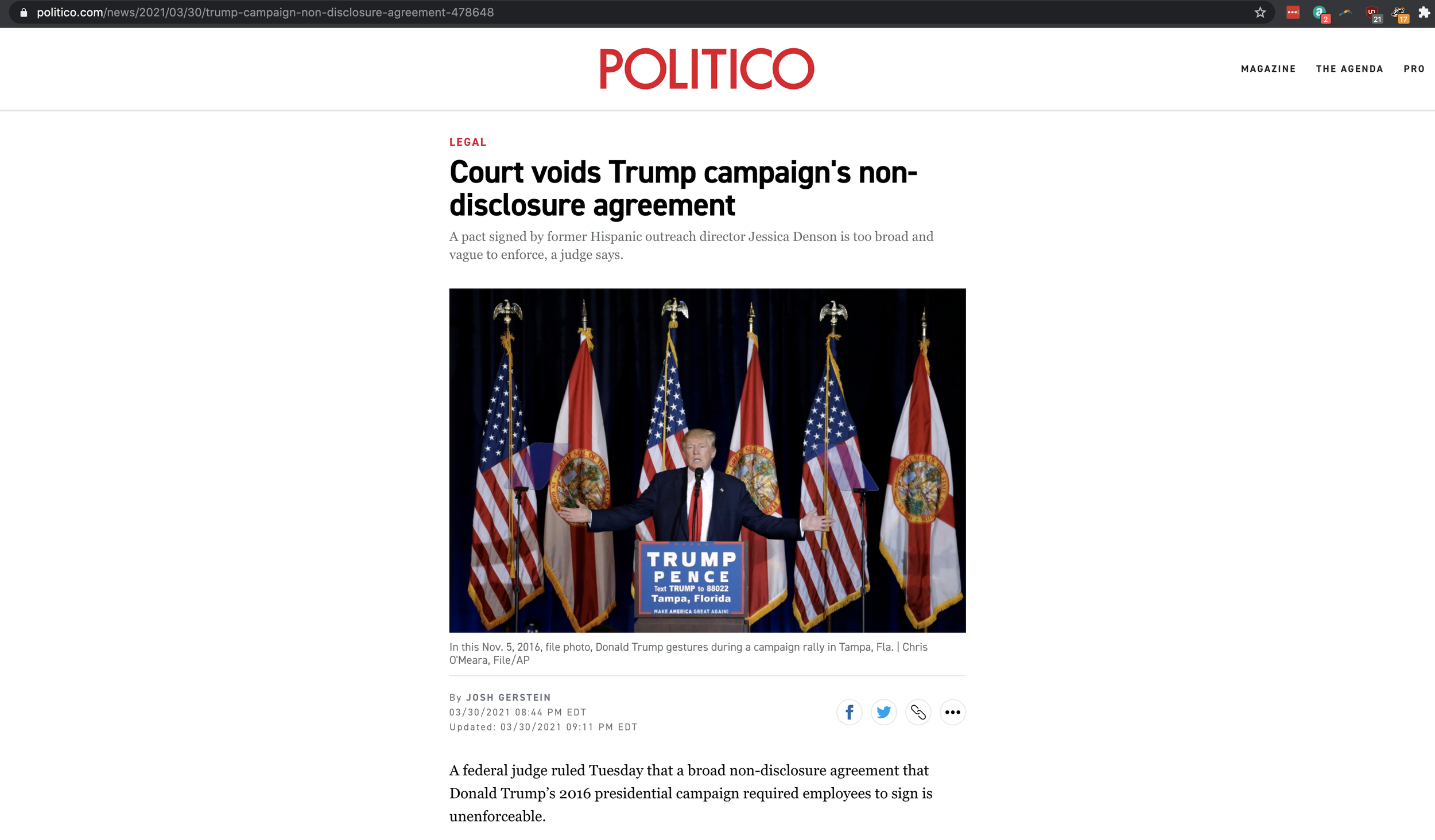

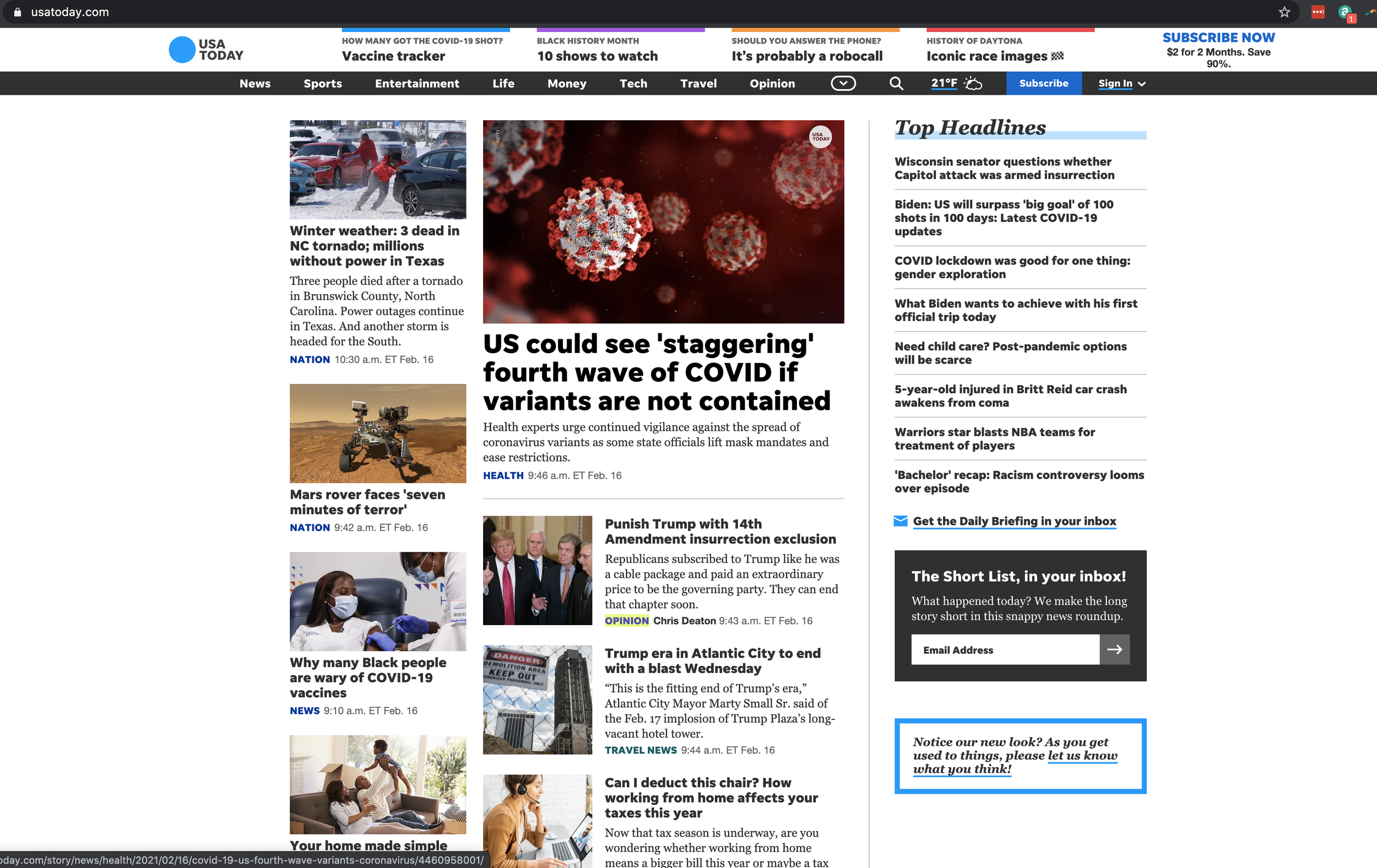
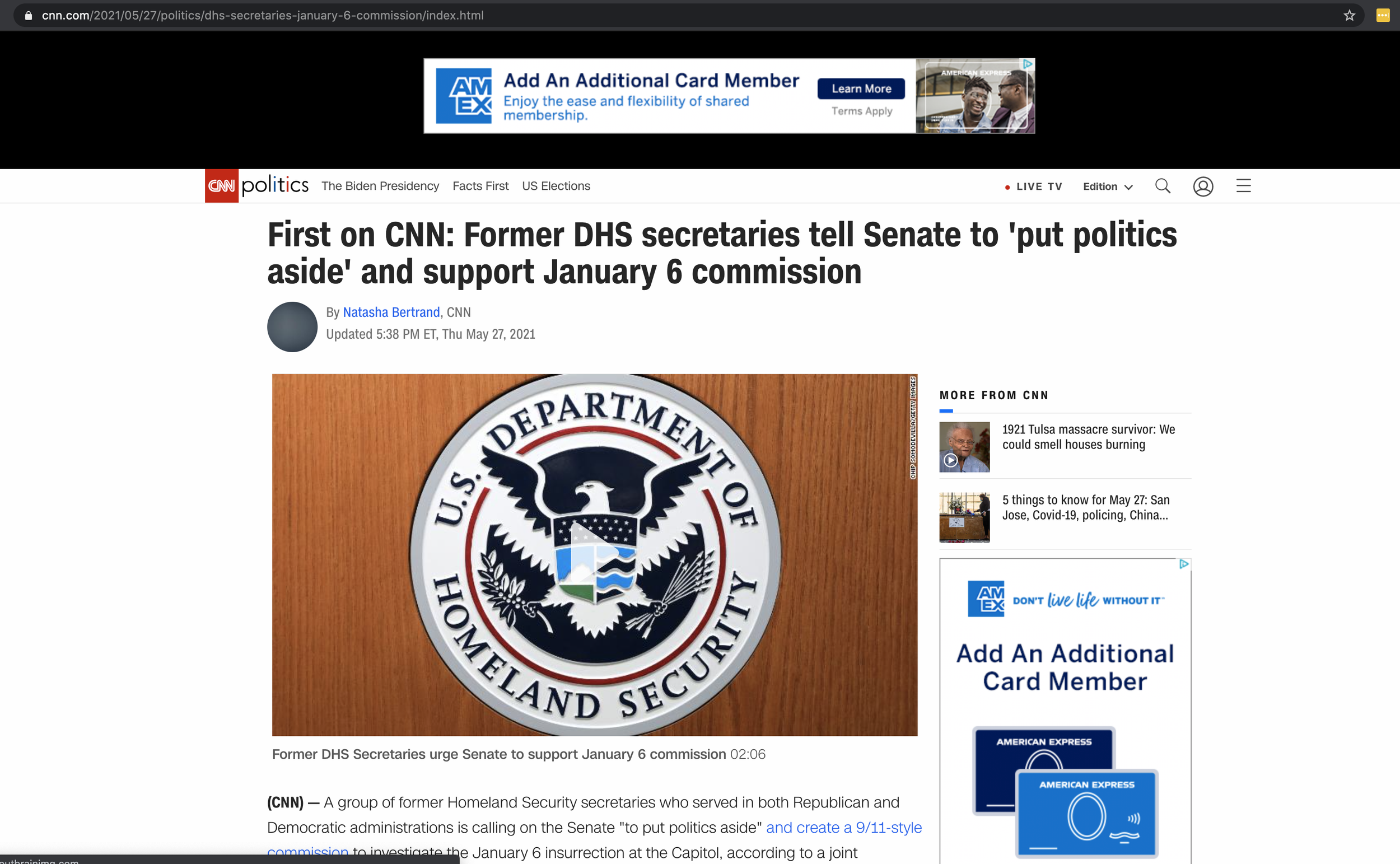
Samples of Protect Democracy campaigns.
The organization's theory of change was that American democracy could be defended by placing the right letter, signed by the right people, in the right publication on the right day, and that a timely lawsuit could avert institutional disaster. That wasn't, I should say at once, a stupid theory. It was the theory that produced the outcomes I'm about to describe. But it's a theory that presupposes a functioning system, and the fact that I've spent the past fourteen months building a very different kind of machine has something to do with the fact that, after 2024, that presupposition stopped being a safe one.
When the question of whether a former president could be tried by the Senate after leaving office became the entire substance of his second impeachment defense, we placed a letter from the Federalist Society co-founder and a hundred and sixty-nine other constitutional scholars in Politico. Majority Leader Schumer cited it three times on the Senate floor. The House impeachment managers cited it repeatedly on the first day of the trial.
When the question of whether a January 6 commission was politically viable depended on whether national security veterans could be persuaded to say so publicly, we placed a letter from a hundred and forty former officials—with former DHS Secretaries Ridge, Chertoff, Napolitano, and Johnson eventually joining—and Speaker Pelosi read it onto the floor of the House. She privately told our team the letter had revived the commission effort when it was dying.
When federal law enforcement was being deployed against protesters in Portland in the summer of 2020 and the regime was considering similar deployments to polling places in November, we built the campaign around the Wall of Moms lawsuit and watched the image of mothers in yellow shirts linking arms against federal agents become global news within forty-eight hours. The deployments the administration was preparing for November didn't materialize. I won't claim full credit for that; no one person ever does in this work. But I do know what we did, and I know what it cost them.
There was more: A letter from over a thousand former DOJ officials on Attorney General Barr's pre-election conduct, which produced a front-page USA Today story and, eventually, confirmation that the Durham report wouldn't be released before the vote. A partnership with Hofstra to stand up a hotline for service members considering unlawful orders. Work with Joan Donovan at Harvard, with the Mozilla Foundation, and with the Electronic Frontier Foundation on the architecture of disinformation response. An election protection communications campaign, conducted largely on background, that culminated in TIME's assessment that our bipartisan coalition had “saved the 2020 election.”
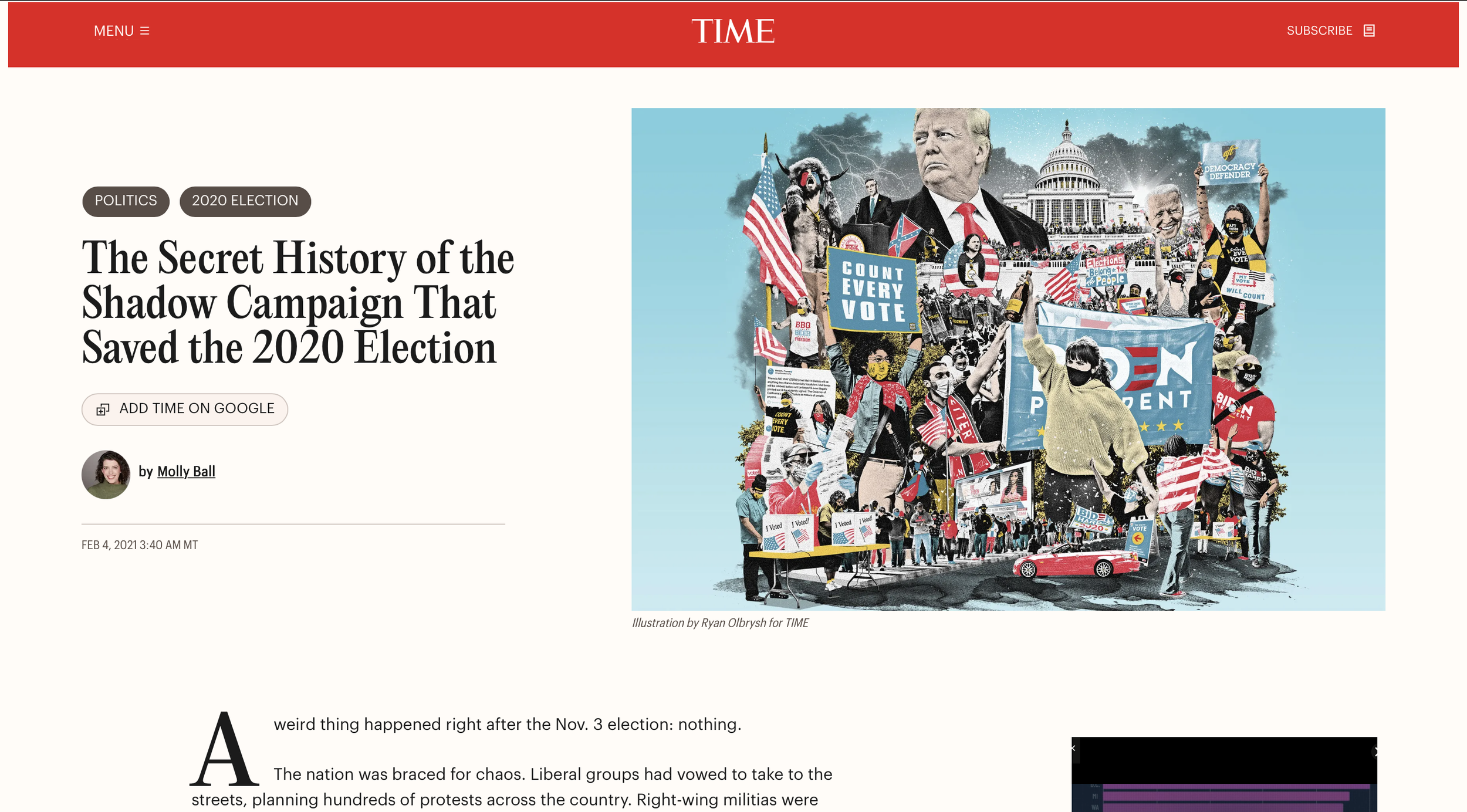
I tell you this not because I'm proud of it, though I am. I tell you because when the second Trump term arrived and I began to argue publicly that the institutional defenders of American democracy were failing to meet the moment, I wasn't speaking from resentment or ignorance. I was speaking as a practitioner who had helped execute the last winning version of the defense the sector was still trying to mount—and who had recognized, with a speed the sector didn't forgive me for, that what had worked in 2020 wouldn't work again in 2025.
The recognition came in the first week of Trump's second term, as Stephen Miller and Russell Vought began rolling out their executive orders. Most of them had been drafted a year earlier, in a nine-hundred-page document that called itself a presidential transition project and read, to anyone who had sat in the rooms I had sat in, as a blueprint for the conversion of the federal government into an instrument of a fascism under a unitary executive.
The pro-democracy establishment, in the months leading up to the election, had debated whether to take Project 2025 seriously—whether it was rhetoric or policy, whether naming it helped or hurt, whether the Heritage Foundation's public document could be treated as a governing intention. By January 25, 2025, that debate was settled.
I knew that the architecture of defense we had built during the first Trump term wasn't going to work against the second. That architecture had been designed for an adversary who still observed the cadences of the system—who still negotiated with the press, who still responded to litigation, who still calculated the cost of a front-page story in the Times. The people now running the executive branch did none of those things. Miller and Vought weren't negotiating. They were executing. The system had stopped articulating, and the defenses calibrated to its articulation had—overnight—become calibrated to something that no longer existed.
I also understood that whatever response was possible would have to move on every lane at once. The sector's habit of organizing itself into specialties—litigation here, protest there, elections somewhere else, each in its own silo, each with its own funders, each unwilling to be contaminated by the work of the others—was a luxury of a period in which the adversary had been similarly divided. The adversary was no longer divided. Project 2025 was a unified campaign. Anything short of a unified counter-campaign would be easily outflanked and defeated.
The counter-campaign would have to be built from a position of almost no capital. The foundations that funded the first-term infrastructure were, in their second-term posture, largely unavailable—captured by the same cautions that had failed them in 2024 and additionally spooked by an administration that had already begun to threaten the tax-exempt status of institutions that opposed it.
Whatever we built would have to be legible, defensible, and compelling on its own merits, without the permission of the ecosystem that had, in 2020, made much of the work possible. It would have to travel without being paid to travel. It would have to grow without being authorized to grow. It would have to reach people who were still too panicked to stand up a response.
On January 26, I posted on Threads that I was going to launch an organization to do the strategic communications and community organizing work the Democratic Party was failing to do. On January 27, the FEC registration for American Opposition was filed. On February 4, the press release went out. On February 5, at noon in every time zone, the first National Day of Protest took place. On February 17—Presidents' Day—the second one happened under the banner "Not My President Day," and the turnout doubled. 50501, which joined our call for the second protest on February 8, 2025—two days after we made it— later hashtagged it #NoKings. The name stuck.
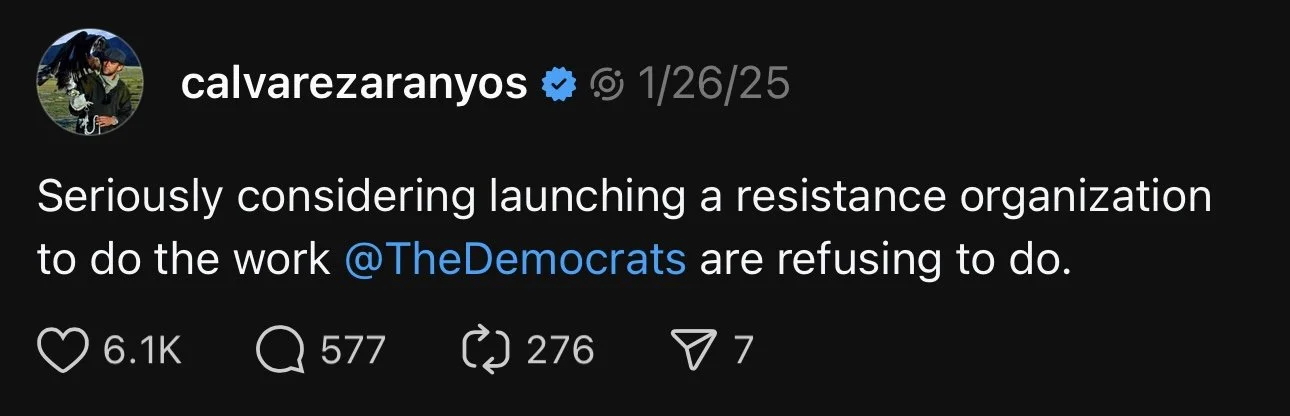
The first post.
From initial social media post to a national mobilization involving millions of people in ten days. I had no staff, a loose advisory structure of people like Reed Galen and Joshua Graham Lynn, a press release I had written on my kitchen counter, and a website landing page I had built in two hours. I mention this not to boast but because I think it's important for the reader to understand that almost everything about American Opposition has been built against the clock with nothing resembling adequate resources, and that this isn't the bug of the story but the feature. The thing we built was the thing the moment required. The moment didn't have the patience for a six-month grant cycle.
What I posted on Threads that January wasn't an improvisation. It was the first executable step of a plan I had already written in my head, in the days after the first executive orders, as soon as I understood where Trump and his acolytes were headed. The plan ran through the midterm election, and it moved in three stages.
The first phase of our strategy was mass mobilization—the restoration, in an American context, of a practice the country had lost. Democracies depend on the willingness of ordinary people to appear in public, in large numbers, at moments when their institutions have failed them, and to declare, by their presence alone, that consent has been withdrawn. The French do this. The South Koreans do this. The Serbs who overthrew Milošević did this. Americans, in the years since the civil rights movement, had mostly stopped doing it. We had traded the street for the Internet, and it hadn't been a fair trade. Rebuilding the habit of showing up wasn't going to be possible through exhortation. It had to be built through practice.
On February 5, at noon, at the Colorado State Capitol in Denver, I spoke to a crowd of over ten thousand people. I told them that I was done—that I wasn't going to be another middle-aged Latino man who watched fascism arrive and kept his mouth shut about it, and that I was asking them to make the same decision for themselves, because this was the decision the moment required and there were no versions of the next four years that didn't turn on whether ordinary people made it. I told them we were about to go through a profound experience. I said the men in charge of the federal government had a plan, and that the plan was going to hurt. I also said that the only thing on the other side of the plan was whether we chose, collectively, to show up and stop it.
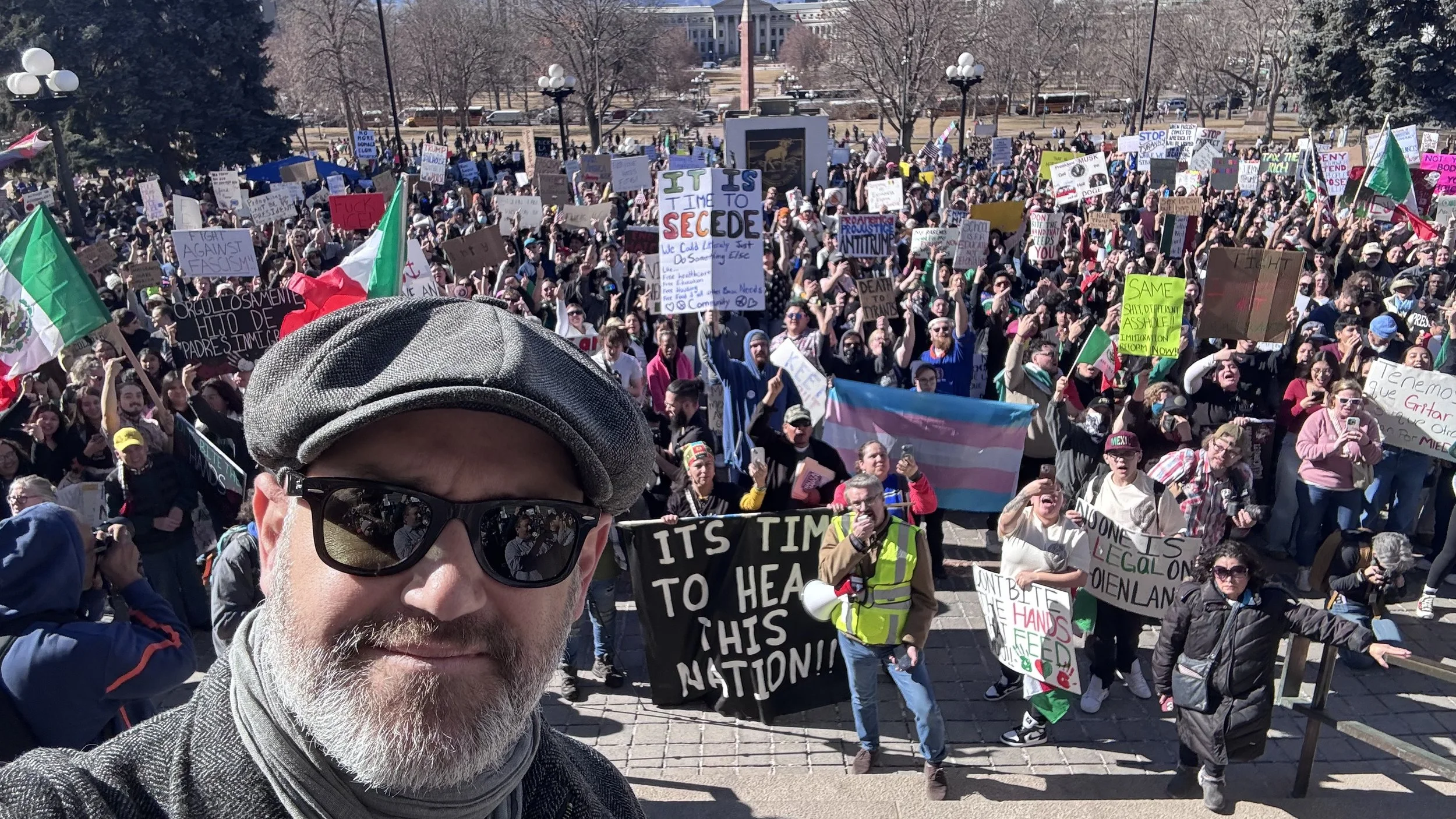
First National Day of Protest, February 5, 2025.
From that day forward, we built a calendar: The National Days of Protest gave way to the Tesla boycott, which gave way to the first No Kings on Presidents' Day, the Hands Off! protests in April, the second No Kings in June, the Fourth of July protests, the D-Day anniversary protests—the largest veterans' protest in American history—and to a procession of other actions that carried the calendar through the summer and into the fall. By October 18 of last year, the third No Kings protest drew more than seven million people into the streets across every state and six continents. By March of this year, the fourth No Kings drew more than eight million. What began with a post on Threads had become, by any measure, the largest sustained protest and boycott movement in American history.
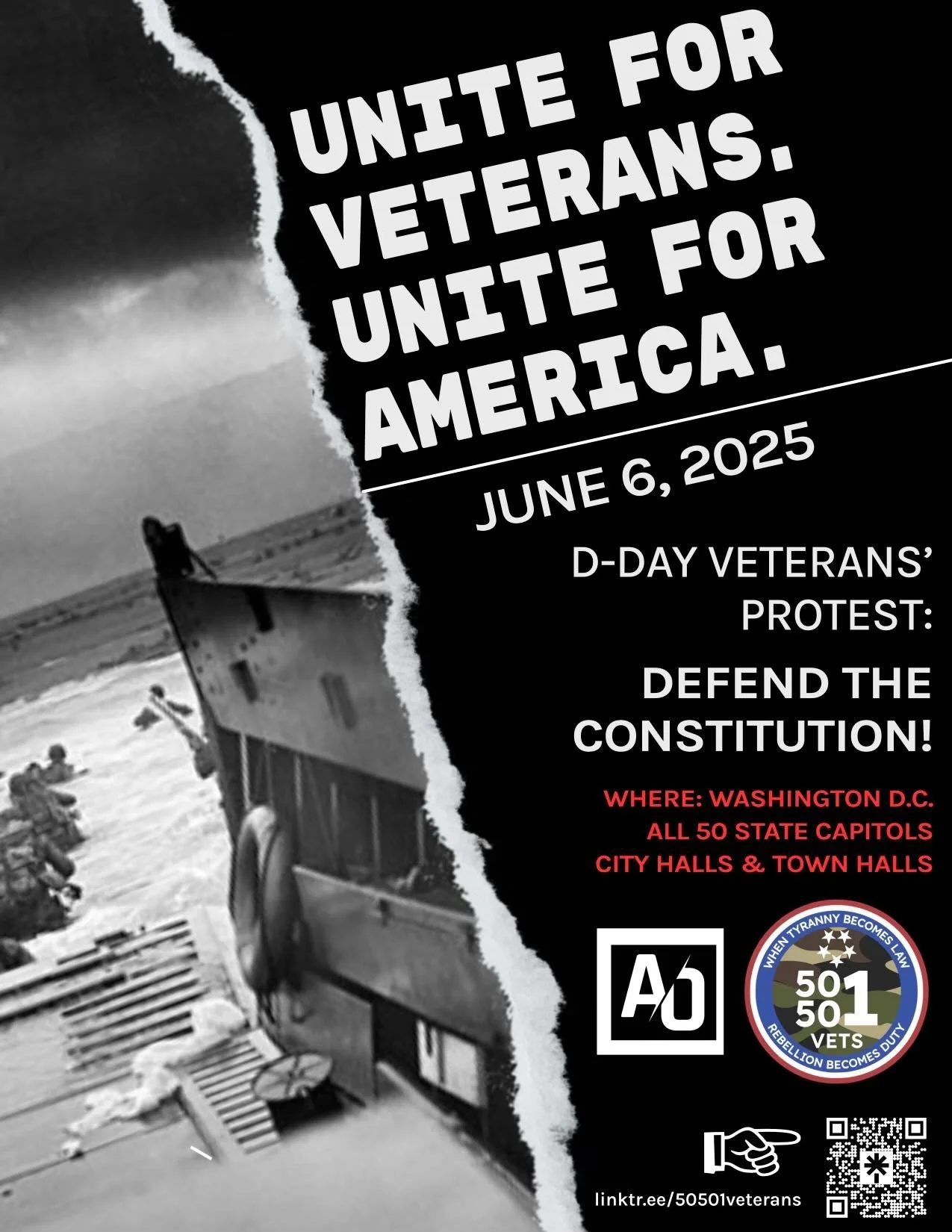
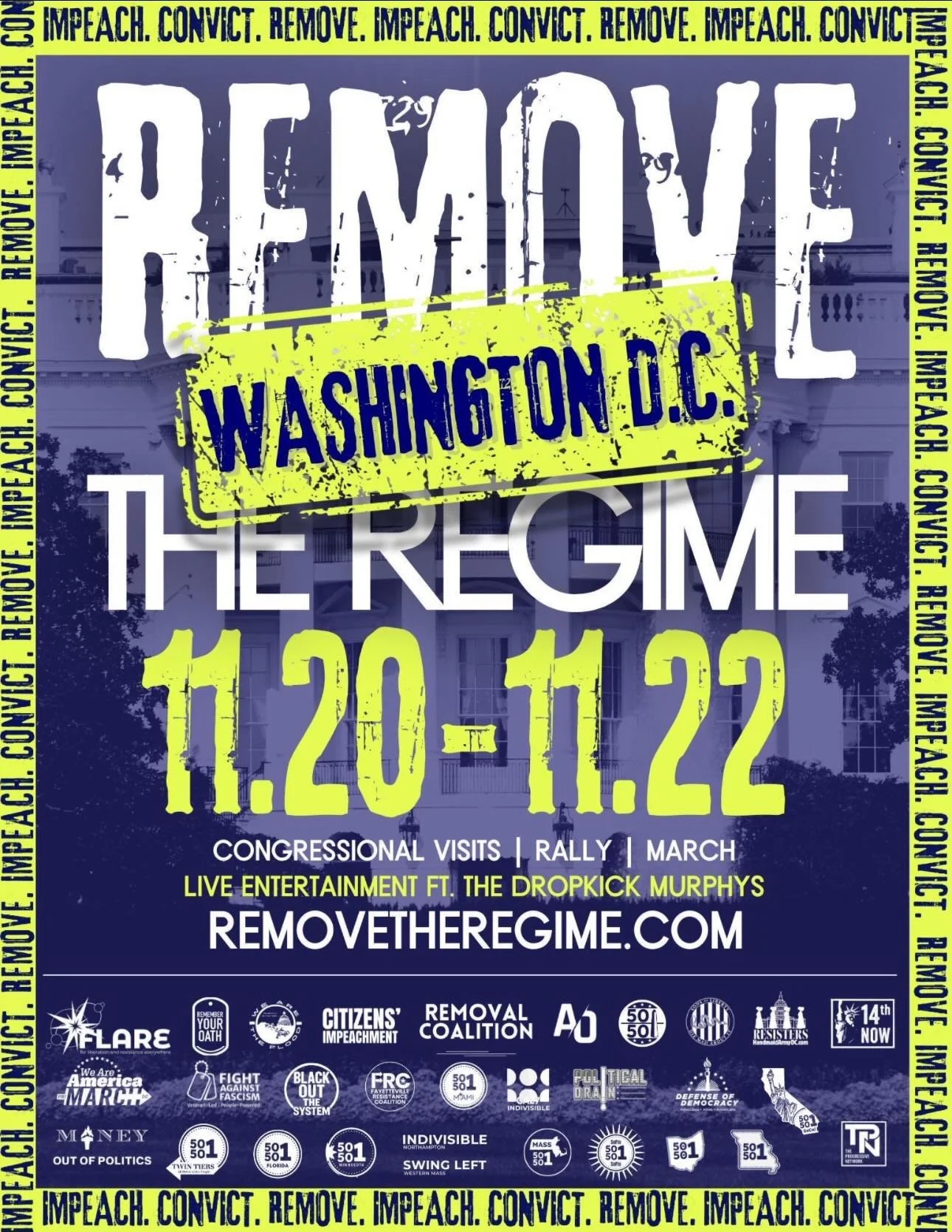

I want to be clear that we don’t claim sole credit for this. On the contrary. All we did was launch the thing and facilitate its growth. Others showed up—most notably when Indivisible joined the national organizing effort with Hands Off! and took over the No Kings brand—and 50501 has been the backbone of the national organizing effort throughout. Our job has been to serve as a strategic communications and community engagement hub—strategizing, branding, and unifying the effort. At times we’ve organized major actions with other partners—the D-Day anniversary protests, Remove the Regime, the Mass Blackout, Broadview, and Mar-a-Lago are examples—but always in service of the same movement.
As we like to say, when we say “we,” we always mean the American people, and when we say “the movement,” we mean every single American fighting to end this regime. We are not interested in credit, and when this is all over, we will more than likely retreat from view and ask to be forgotten.
On June 14, 2025, in Los Angeles, I stood in front of a quarter of a million people who had gathered in the streets of a city that the federal government had occupied with the National Guard. There were soldiers stationed across the intersection from where I was speaking. There were helicopters. There were federal snipers on the roofs of the buildings.
I told the crowd that what they were doing—being there, in that number, in front of those troops, at that moment in the country's history—was the answer to the question the moment had been asking since January. I told them the street wasn't beneath democracy. That the street was where democracy was living because the buildings in which democracy was supposed to live had been captured. I told them what they had already proven, which was that the American people had remembered how to stand up for themselves.
The second phase was direct action—the conversion of mass mobilization into pressure aimed at specific people in specific rooms. On September 2 of last year, at Union Station in Washington, we moved from the streets to the doors of Congress. Fourteen hundred of us visited every congressional office in a single afternoon, demanding impeachment. Within five hours, Hakeem Jeffries's staff called me to request a meeting.
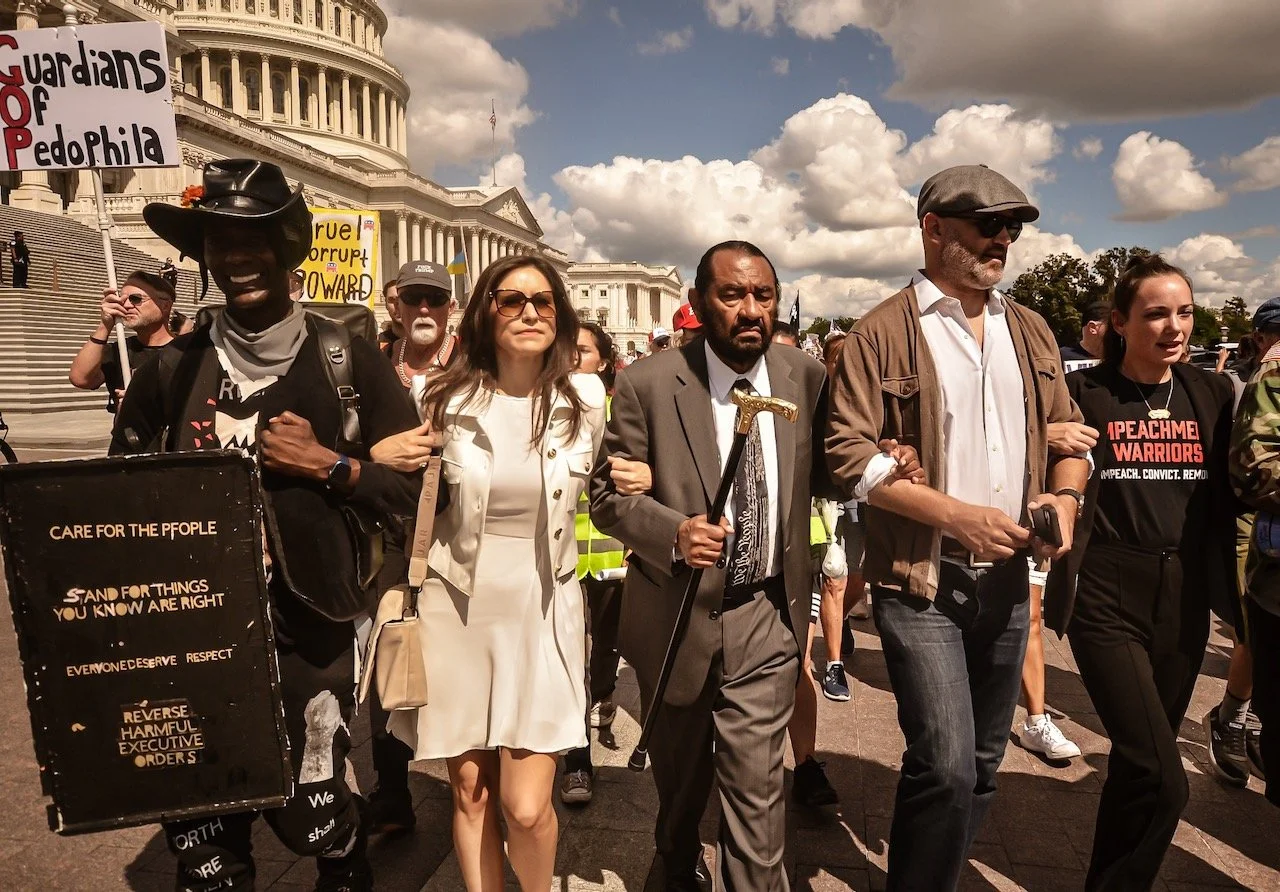
Marching to congressional offices with Rep. Al Green. (Photo: Jose Mejia, Owl Media)
That's a difficult meeting to get in Washington, and the speed with which it came confirmed a premise the sector had stopped trusting: That physical presence, at the threshold of a member of Congress, still moves what letters and phone calls have stopped moving. Remove the Regime followed in November, delivering impeachment resolutions against both the president and the secretary of defense directly to the Capitol.
It’s striking that despite traditional political non-profits constantly claiming how effective they can be in working with Congress, the four primary impeachment resolutions filed in Trump’s second term have been the product of efforts by the organizations leading the movement on the streets. Three of them came from the Removal Coalition and one from Stand Up For Science. None from civil society.
The Mass Blackout came during Black Friday week, aimed at the one metric the administration still cared about—economic performance. Direct actions continued at ICE facilities, at media organizations, at the Heritage Foundation, at Fox News, at Russell Vought's home, and at the detention center in Los Angeles on what we later came to call the National Fuck ICE Day. These actions applied pressure on the institutional architecture that had shielded the regime, meeting it where it lived.
I’ll cite two examples. The first was at Mar-a-Lago. We marched on the gates of the president's Florida residence alongside Cliff Cash and the armed leadership of the Revolutionary Black Panther Party—men and women of serious political commitment, descendants of an essential tradition in American organizing. Their presence there wasn't a stunt—it was a claim about who the movement belongs to and about the long American lineage of Black radical organizing against presidents who have treated Black Americans as the country's acceptable losses. We marched with them because the movement we are trying to build isn’t going to be credible unless it could be seen standing, in public, with the people who have been forced to build the fiercest versions of American resistance because they’ve had no choice. And because I believed—and still believe—that the only movement capable of surviving the next four years is one that has made its peace with being called radical by people whose own positions are an accommodation to radicalism of a different order.
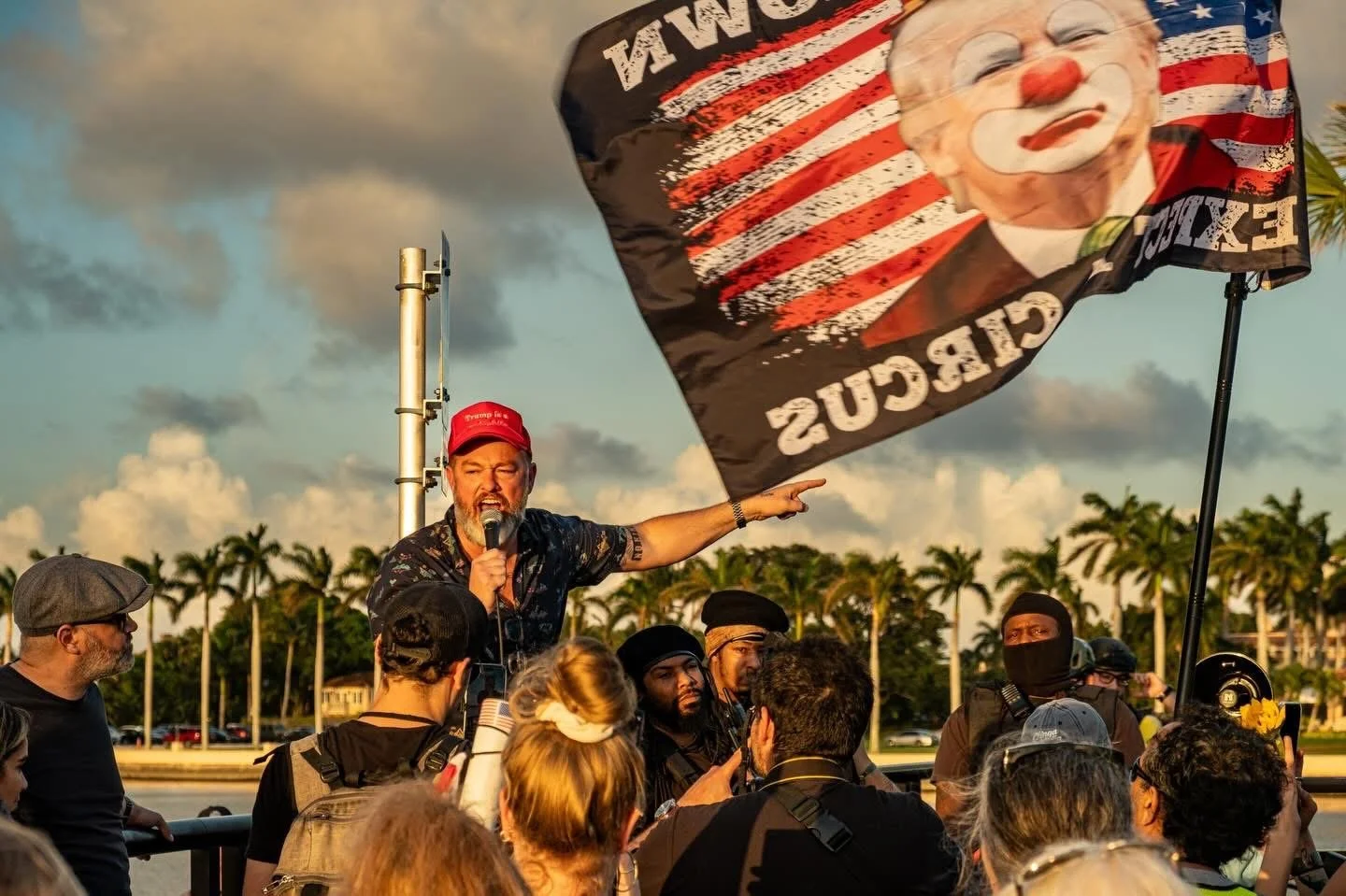
Cliff Cash at Mar-a-Lago. (Photo: Jose Mejia, Owl Media)
The second was in Cookeville, Tennessee. Cookeville is a town of about thirty-five thousand people in the hills east of Nashville, in a county that voted for Donald Trump by better than three to one. I went there with Black Panther leadership because I believe that a movement that can't reach Cookeville is a movement that has already lost the fight it claims to be in.
The old sector had spent twenty years perfecting a geography of resistance that stopped at the Whole Foods parking lot. You can't save a country you won't go to. We went there. We met with local organizers. We demanded local justice for police and ICE brutality after the murder of a Cookeville resident by local police and the ongoing complicity of Tennessee’s government with the worst abuses of federal immigration agents.
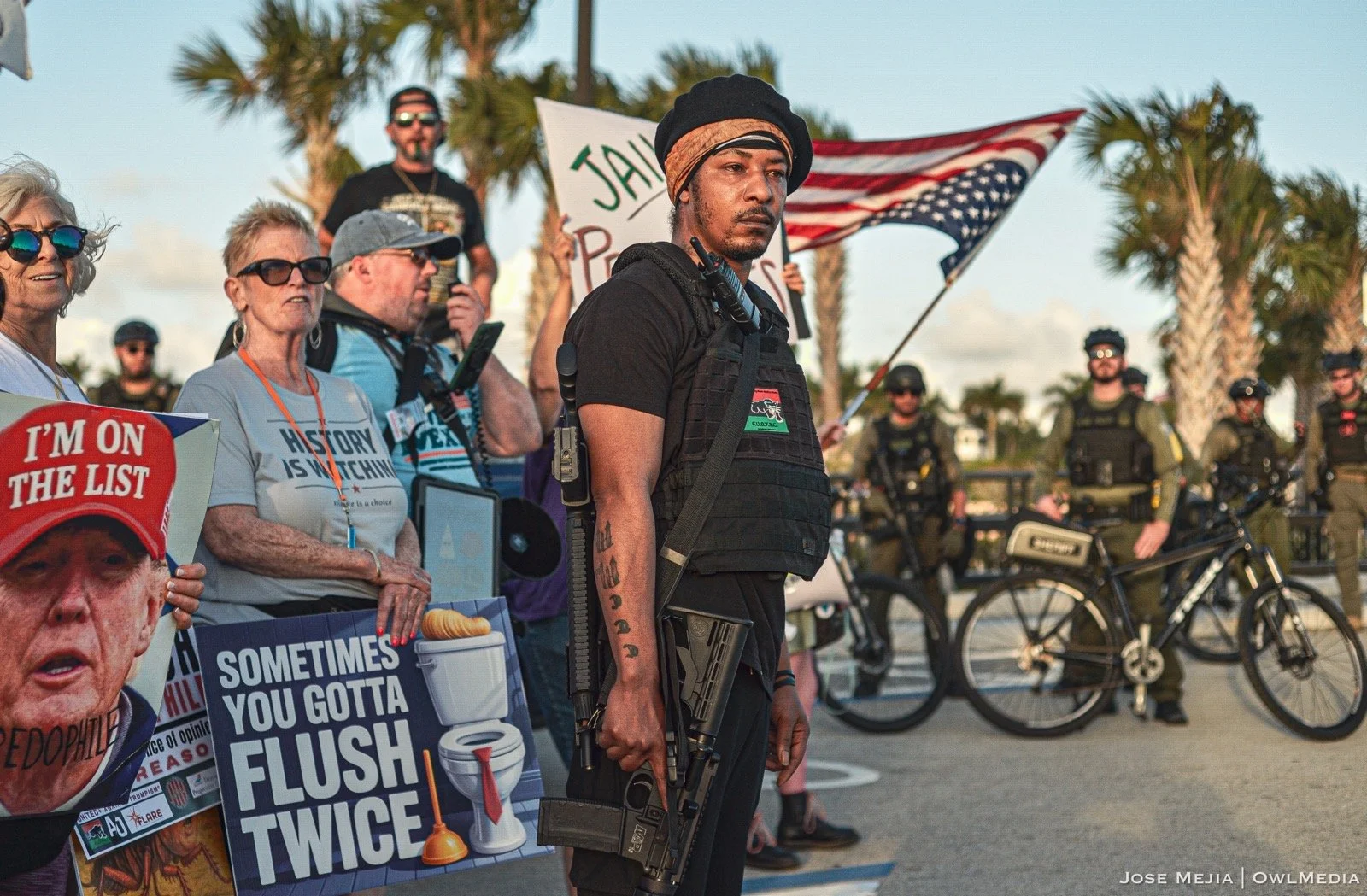
The Revolutionary Black Panther Party at Mar-a-Lago. (Photo: Jose Mejia, Owl Media)
The image of armed Black radicals and a Dominican-born strategic communications operative walking through downtown Cookeville didn't go viral in the way the dildo blitz went viral—it wasn't supposed to—but it made a different argument, which was that the movement we are trying to build isn't going to abandon the American interior to the people who’ve spent a generation lying to it.
We’re also not going to allow our movement to continue to be white and suburban. We are going to do the work of recruiting the people who least deserve the burden because this nation can’t be saved without the participation of those who have always saved it: The marginalized communities who have internalized all of the lessons of tyranny because they’ve had to endure it since their ancestors were brought here in chains.
That wisdom can be leveraged in many ways, but perhaps the most important is in guiding our cultural response to this struggle.
As I wrote on Substack on Christmas Day last year: “A culture is only fully compatible with the collective pain that bore it. When a culture is removed from its originating trauma and applied to a different population—one with a different historical wound—it can entertain, but it can’t heal. It cannot fully process pain it does not recognize as its own.”
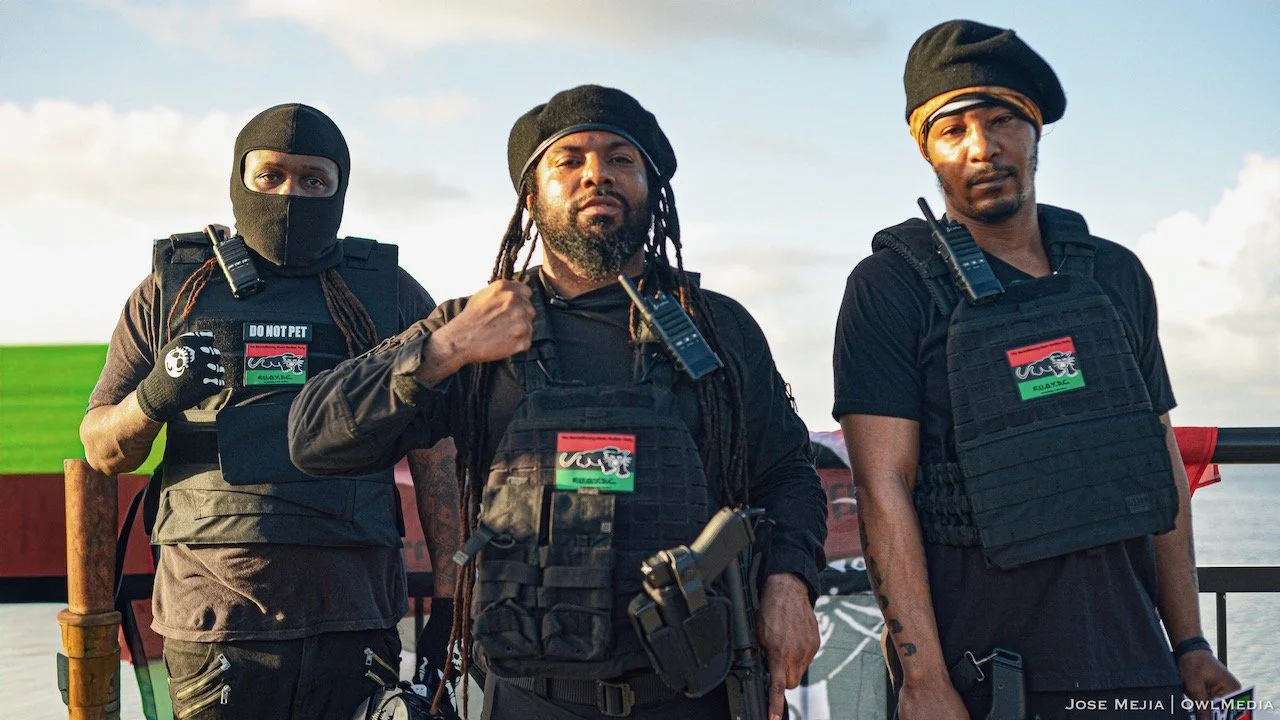
Revolutionary Black Panther Party leader Dr. Alli Muhammad and comrades. (Photo: Jose Mejia, Owl Media).
I believe our nation’s outcomes will be shaped by our emotional intelligence and by our willingness to learn from and follow those who’ve lived under tyranny for as long as they’ve occupied this soil. I pray that Black and brown communities find the grace to teach white Americans to build a culture native to their experience that allows them to metabolize their pain constructively.
The third phase of our strategy is the campaign season program. American Opposition is a political action committee. We can't coordinate with candidate committees, but we can campaign on their behalf, and we can—and will—replace ineffective Democrats in the primaries with candidates who will fight and defeat every possible Republican in the general election.
We have built a slate of candidates we are supporting in Democratic primaries. Some of those, like Graham Platner in Maine, have already delivered victories that have undermined the perceived power of the Democratic establishment. We will continue to fight to replace as many ineffective Democrats as we can in the primaries, so as to deliver a party that can maximize victories against Republicans in the general election.
That new party will come with new leadership and a harsher mandate—capable of fighting Trump head-on and launching a comprehensive program to rebuild our democracy and deliver truth, accountability, and justice. In our view, the reconstruction of our democracy must begin immediately after the new Congress takes power. We can’t afford to wait for Trump and Vance to leave office.
That’s the plan. It was established in the last week of January 2025. Everything that has followed—the fourteen months, the arrests, the speeches, the Latino-led protest at Broadview, the tear gas and pepper balls in Minneapolis—has been its execution.
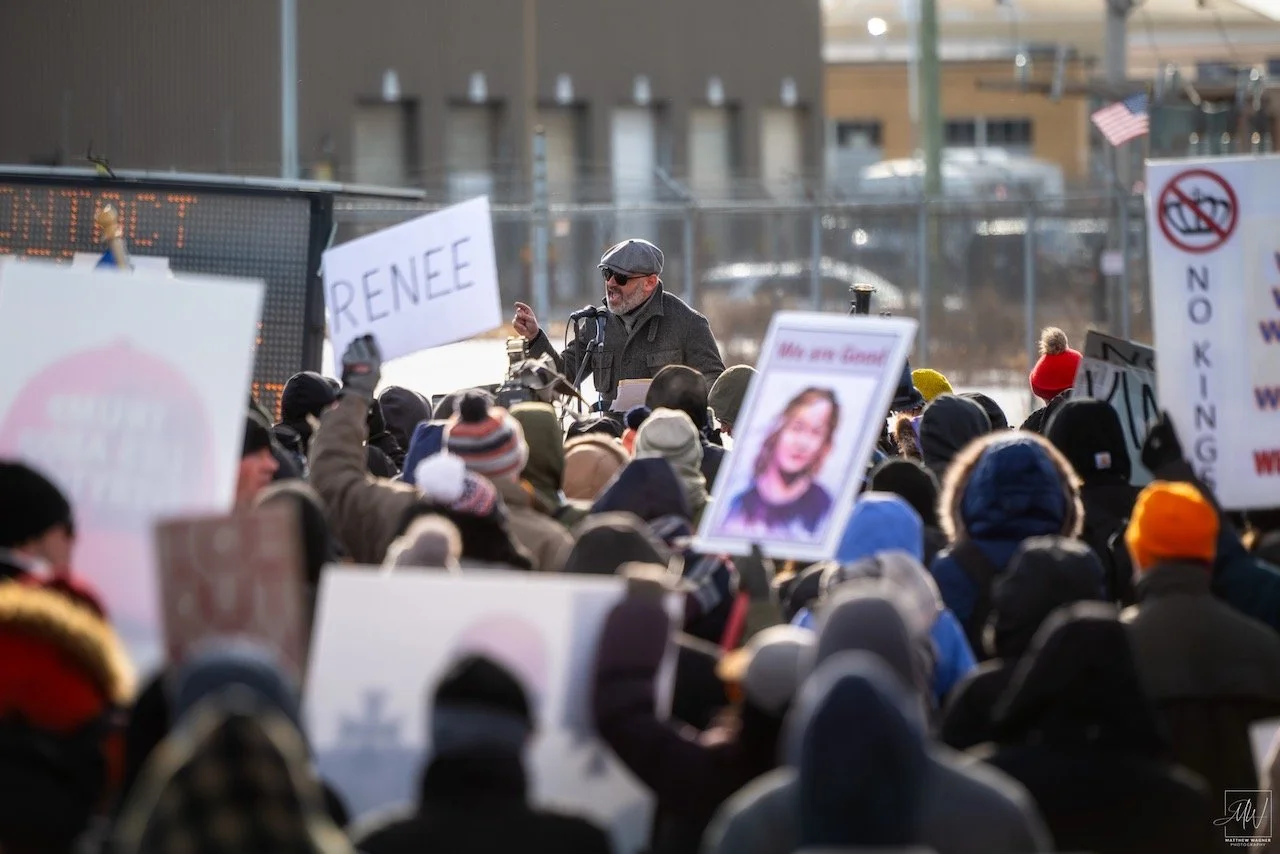
The Broadview protest, centerpiece of the National Day of Protest Against ICE. (Photo: Matt Wagner, Owl Media)
The ecosystem I had worked inside in 2020 had come to believe that the way you fight authoritarianism is by documenting it. We've done the documenting—American Opposition maintains what is, at this point, likely the largest organized catalog of the second Trump administration's actions anywhere in civil society—but we haven't confused documentation with confrontation. A catalog of abuses is a tool for accountability, which can only come once the fight has been settled. The work that has most mattered is in the generation of moments—images, campaigns, days—that have reached people who don’t track politics closely.
50501’s “No Kings” was a name that could travel on its own. Remove the Regime was built the same way. The Mass Blackout. Unite for Veterans. The Fourth of July, for which—in a hilarious episode—I spoke in Miami and was interrupted mid-speech by Enrique Tarrio, the founder of the Proud Boys and a convicted January 6 seditious conspirator. Each was designed to carry its own meaning, reach its own audience, and reinforce the others. A friend, watching the shape of it emerge last winter, put it simply: "It looks like a brand, operates like a campaign, and grows like a movement." It’s a shape built specifically for this moment and the culture we’re inhabiting.
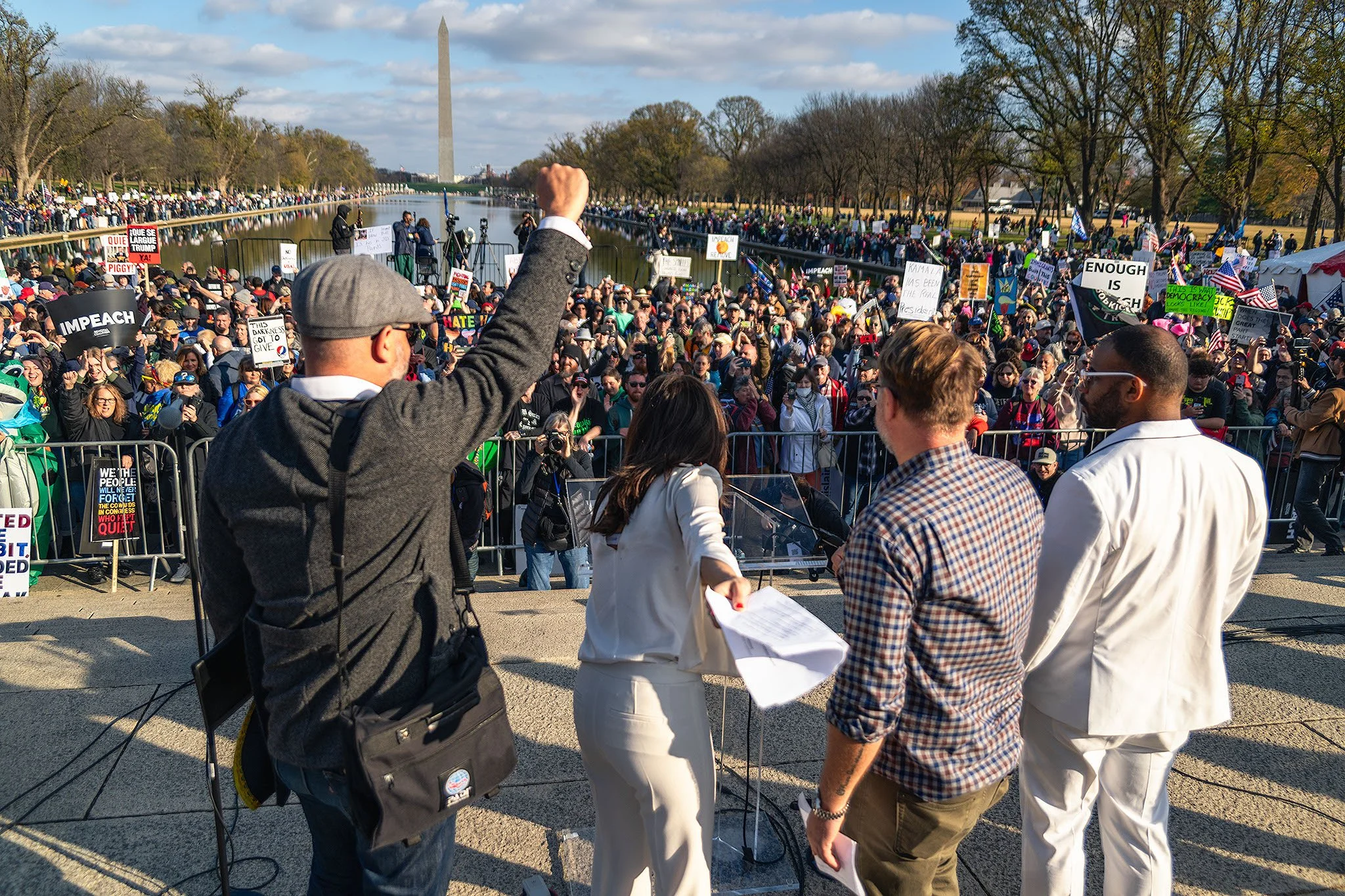
Remove the Regime, The Lincoln Memorial, November 22, 2025. (Image: Status Coup News)
Inside that architecture, one instrument among several has been what I call tactical absurdity. We didn't invent it. It belongs to a lineage that includes Otpor! in Serbia, the Orange Alternative in Poland, and the escraches in Argentina—movements that discovered, in their own fights against regimes that had forgotten their people, that authority that depends on dignity can't survive being made ridiculous, and that humor is a renewable fuel where outrage isn't. A population can't sustain cortisol-level emergency for fourteen months without burning through itself. It can, however, laugh for fourteen months, and a laughing population is a functioning one.
Mockery is also the single register this administration can't metabolize. It can absorb anger—anger justifies its crackdowns. It can absorb despair—despair confirms its victories. It can't absorb being openly laughed at, because its founding claim is strength, and a narcissistic strongman can't sustain that perception while being ridiculed.
I'll give you one example, briefly, because it captures the effectiveness: Some close friends of ours received a large donation of dildos from a movement-friendly Minneapolis sex shop. They took those dildos to the Whipple Federal Building and unleashed them on ICE agents. Jolly Good Ginger, a prominent veteran and influencer, labeled it “Operation Dildo Blitz,” mocking the federal government's name for the operation that had deployed ICE to Minnesota. The name stuck.
The image of dildos affixed to federal vehicles and being picked up, sheepishly, by ICE agents traveled from Los Angeles to London to Tokyo in a single news cycle. The right-wing media was obliged to reproduce it in the act of denouncing it. Their outrage became our distribution.
And because the images were absurd, the administration couldn't credibly describe the protesters as violent insurrectionists—the counter-narrative every other street action of the past year had been forced to absorb. You can't cast a crowd of people throwing sex toys while wearing inflatable costumes as domestic terrorists without becoming the joke yourself. That's the doctrine, in a single action: To deny the regime the image it needs to justify the crackdown it wants.
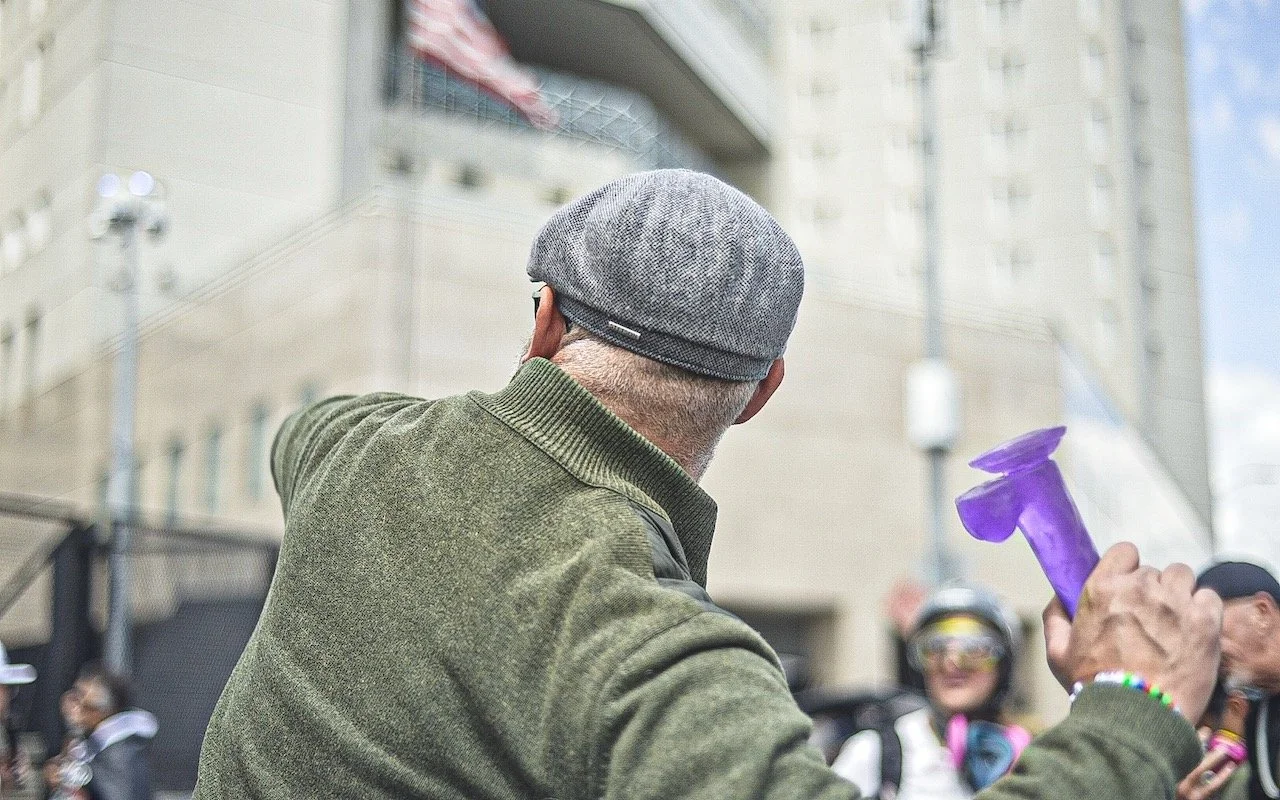
National Fuck ICE Day action in Los Angeles, California. (Photo: Jose Mejia, Owl Media)
Tactical absurdity is one lane. We've run on many at once—the streets, the direct actions, the exclusion of mainstream media, the opposition research, the legal campaigns, the coalition work, the art, the music, the boycotts, the scorecards, the congressional pressure, the candidate pipeline—because our adversary is running on all of them too, and a movement that defends only some of its lanes automatically cedes the others.
What I want to establish here is the architecture: A single strategic intelligence moving across every lane at once, against an adversary that had assumed the defense would remain as siloed as it had always been.
There was also the other kind of work, which a campaign like ours can't do without and which has, I think, been most misunderstood. I mean the public diplomacy—the speaking across the line, the addressing of the adversary as a person who still has a choice.
On June 11 of last year, in the middle of the federal occupation of Los Angeles, I wrote a letter to Major General Scott Sherman, the commander of the National Guard troops that had been deployed there. I addressed him by name. I thanked him, and the men and women under his command, for their service. I told him that I had founded American Opposition because I had been centrally involved in the fight to protect the 2020 election and because I had grown up in the Dominican Republic under an elected fascist named Joaquín Balaguer, and that I knew where we were because I had lived it. I told him I knew Donald Trump because I had confronted and beaten him before. And then I wrote the paragraph that mattered most to me, because it was the paragraph his soldiers were least equipped to write for themselves.
I know this fear, I told him. I grew up in it. I saw the corruption nakedly. Felt the tingle in my spine when I approached the limits of my freedom. Understood the impunity of the state and had to accept it without choice. I told him I hoped he recognized the conflict between his current mission and his oath. I told him I hoped he saw the doubts in those he commanded. I told him I hoped he honored his responsibility as a custodian of wisdom and showed them the best path forward. And I ended the letter with the sentence I still think about most often, at night, when the question of whether any of this has been worth its cost comes back to find me.
“All I have is hope. I hope that's enough.”
I don't know whether General Sherman read my letter. What I know is that the letter was written in the tradition of American public address that runs from Douglass to Lincoln to King, which has always understood that the moral authority of a political argument is proportional to the seriousness with which it treats the humanity of the people on the other side of the line.
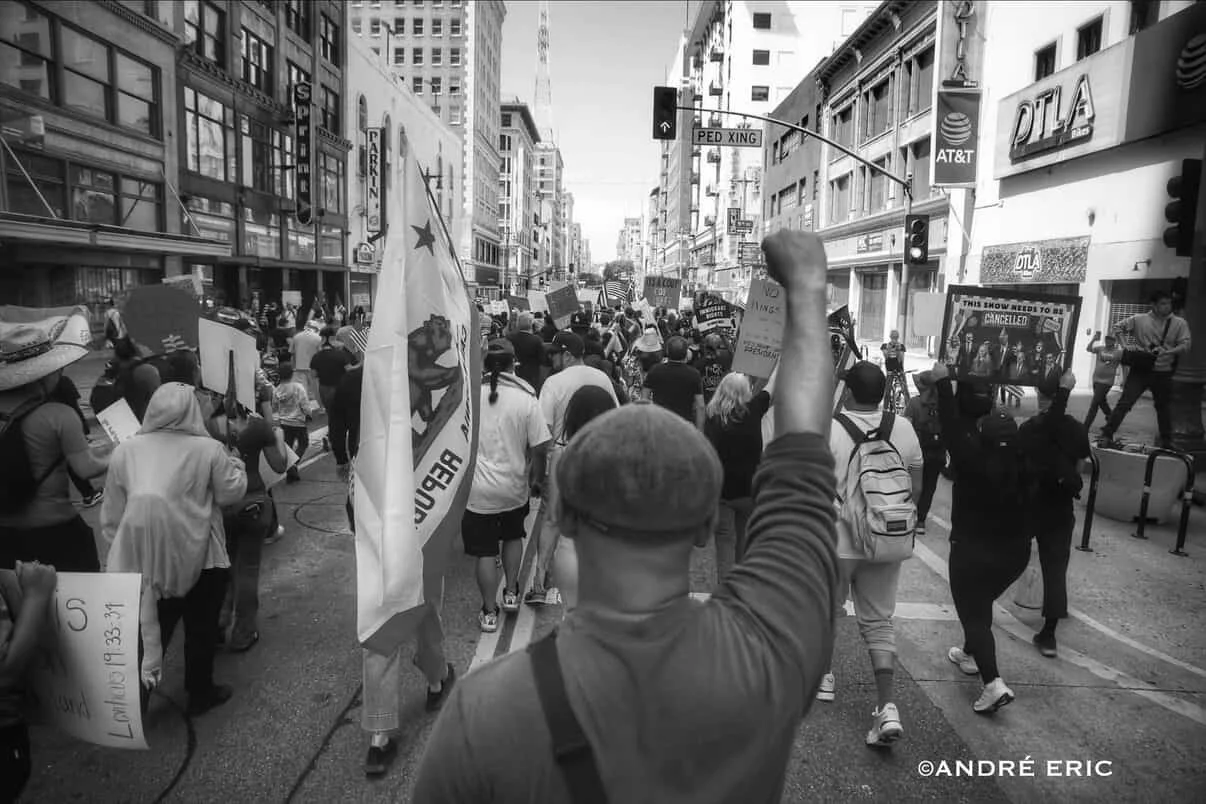
Marching in Los Angeles. (Photo: André Eric)
A movement that can't address its adversaries as people who still have a choice isn't a movement. It's an army. And we didn't build an army. We built a movement because we believe that the person giving the order in the federal building is a person who, at some point in his life, took an oath to something larger than the man who had appointed him, and that the job of an organizer—alongside all the other harder jobs—is to keep reminding him that the oath he took is older than the orders he's currently saddled with.
This is what the political non-profit sector hasn't understood about what we've been doing: The traditional levers don't work in this moment, but the address, the spoken word, the letter to the general, the speech at the monument, the profile in the Spanish paper—these are also instruments of democratic argument, and they still work. They still work because the people who receive them are still people. Because moral address is how a movement that has refused violence also refuses dehumanization. Because a country that has forgotten how to speak to itself in that register is a country on the road to becoming a place where none of us want to live. Because all of us know that mockery works and that taking ourselves too seriously is exhausting and demoralizing.
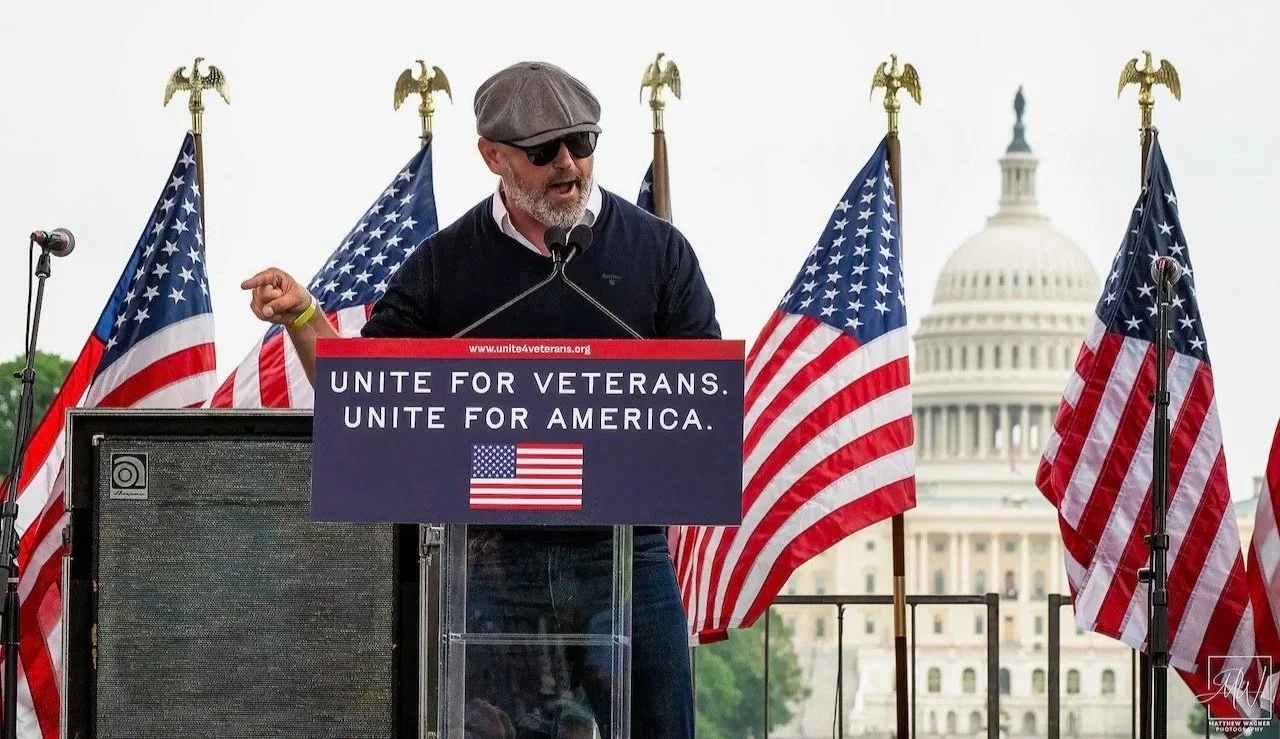
Unite for Veterans rally in Washington, DC. Centerpiece of the largest veterans demonstration in American history on June 6, 2025. (Photo: Matt Wagner, Owl Media)
The argument of American Opposition is simple and, I hope, clear by now: When the institutions that were designed to hold power accountable have ceased, structurally, to be able to do it, the defense of democracy migrates to the street. Not because the street is a romantic place. Not because marching is a substitute for governance. But because the street, under those conditions, is the only remaining venue in which the people can exercise the sovereignty their institutions have stopped exercising on their behalf. The street isn't beneath democracy. The street is where democracy lives when its buildings have been captured.
I spent the most consequential fourteen months of the 2020 election cycle helping to guide our nation’s institutional defense at its highest level. I know precisely what those institutions can do because I led some of that work. I also know precisely what they can't do under present conditions because I've watched them try.
In 2020, the defense worked because the adversary was still within the system. A Republican senator could still be moved by the signature of a Federalist Society co-founder. A federal agent could still be restrained by a judge. A department could still be shamed by a front-page story. Every one of those levers has been tried again since January 25, 2025. A few of them are still moving, at the margins. Most are not. The levers haven't been broken by accident—they've been broken by a regime that studied, during the four years it was out of power, exactly which levers had defeated it the first time and returned with a plan to systematically disable them.
When the levers no longer move the weight, two responses are available: The first is to keep pulling them, and when they don't move, to pull harder. That has been the response of most of the political non-profit sector. I don't want to be unfair to the people making that choice; many of them are friends, and many of them are doing necessary work under conditions for which no one is prepared. But I believe that pulling a broken lever harder isn't a strategy. It's a category of defeat.
The second response is to build a new machine. That's what American Opposition is. It isn't a rejection of the institutional work—the letters, the lawsuits, the validators, the scholars, the meticulous legal scaffolding that has kept parts of the country habitable through all of this—but a recognition that the institutional work, standing alone, can no longer carry what's being asked of it. The street has to carry the rest of the weight. And the street, in order to carry it, has to be organized, disciplined, strategic, creative, patient, and brave. The street has to look like a brand, operate like a campaign, and grow like a movement. The street has to do, in public and in daylight and in every time zone at once, what the institutions were built to do but have stopped doing.
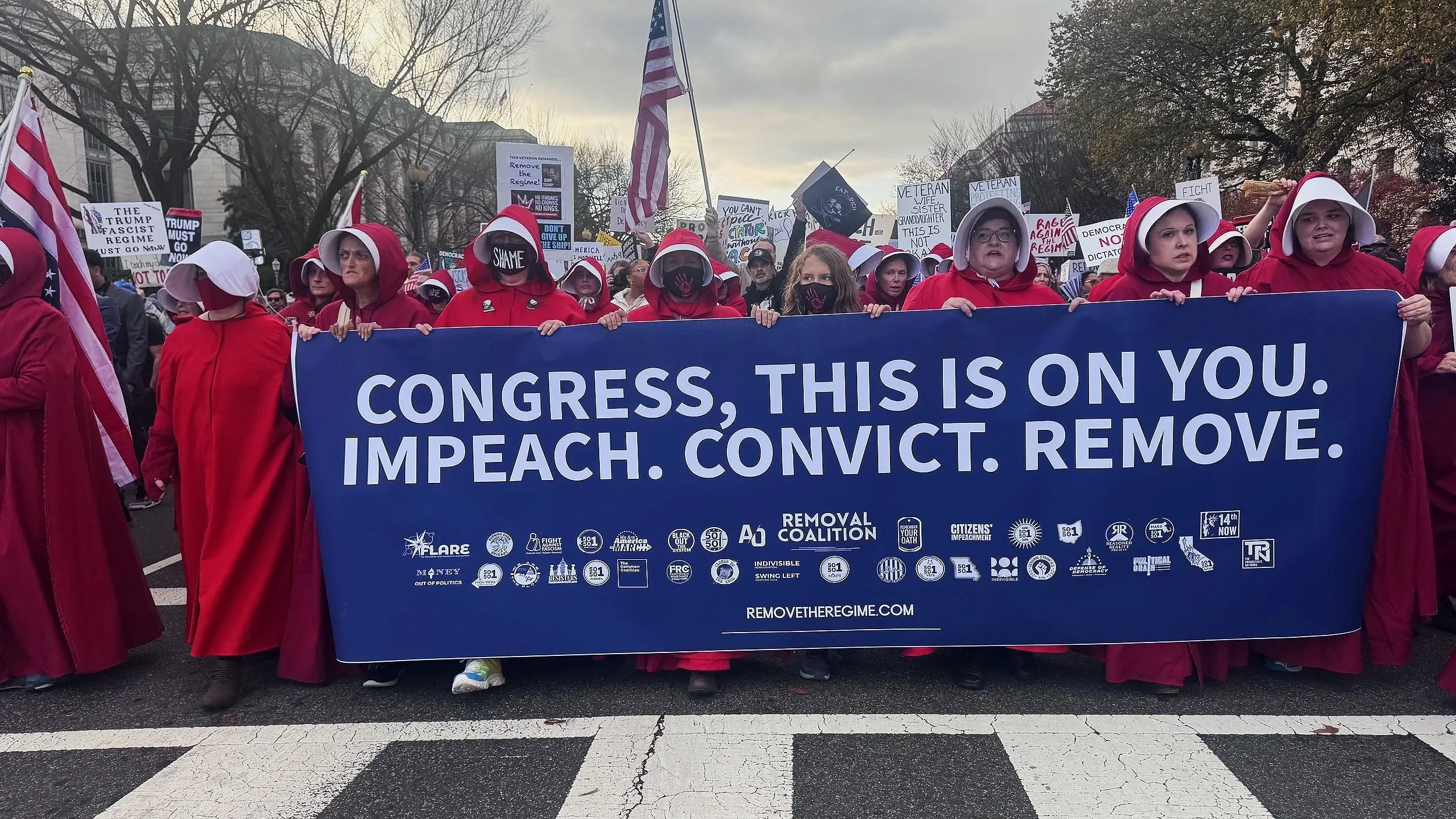
The Handmaid Army leading the Remove the Regime march in Washington, D.C.
On the eve of the first National Day of Protest, in a founding letter that went out on the American Opposition website before anyone had heard of us, I predicted that the most powerful man in the world was going to fire some generals and then openly defy a court order, and that no one in our institutional architecture was going to be able to stop him. Everything I predicted has come to pass.
But then I wrote the sentence I want you to carry out of this essay: “Don't forget to be brave.”
I meant it then and I mean it now. It's going to get scarier, especially for people with children, because the fear of losing the future you've imagined for a child is a different order of fear than any other, and because that fear is what the regime is counting on to produce the silence my island ran on for fifty years.
The silence is what I recognized on November 6, 2024. It's the silence I've spent fourteen months trying to prevent from settling over this country. The silence is the product of an internal negotiation. Of weighing the risks of our words. It isn't fully here yet, and it's still possible to keep it from arriving. That possibility depends, more than on any strategic calculation I could describe, on the willingness of ordinary people to refuse the silence personally—to show up, be counted, say what they think, make noise, and keep escalating relentlessly until the effort delivers victory.
What I've described here is the architecture of the first fourteen months—the three stages of a plan that runs through the midterms.
I don’t want to minimize the results to this point: The immaculate election last November where Democrats won every race they could win—a historic first. The nearly unanimous vote to release the Epstein files after multiple unanimous votes from the Republicans to block it. The historic number of Republicans retiring from Congress. Trump becoming the least popular president in history.
Those things haven’t happened because of anything done by the Democrats. They are, after all, less popular than Donald Trump. They’ve happened because of a movement that achieved 43% identification with Americans—higher than the identification with Democrats, Republicans, or MAGA—in less than a year. A movement that has kept pace—both in terms of growth and tactical variety—with Trump’s rate and breadth of destruction.
In other words, we’ve been watering the dirt, and they’re getting mired in our mud.

Fourth of July National Day of Protest, 2025. Interrupted by Proud Boys leader Enrique Tarrio. (Photo: Jose Mejia, Owl Media)
That’s the power of the American people showing up as political power after being funneled through a strategy that is clearly working.
Despite the unbroken string of victories, as we recently noted in our post-election strategy, which we titled “The Two Fronts,” we have decades of work ahead of us. We must prepare ourselves for sustained effort. In many ways, what comes next is harder, if nothing else because it’ll lack the urgency of this moment and will compound with our exhaustion.
Taking authoritarianism apart isn't the same as putting a democracy back together, and the institutional renewal that will be required—a Democracy Renewal Commission, truth and accountability work, reconciliation dialogues across the communities this period has riven, a fellowship to train a new generation of organizers, an anti-disinformation infrastructure, a digital archive that will prevent the forgetting authoritarian regimes rely on—is the work that will occupy whatever is left of the rest of my professional life. It's also, I think, the work I was in part built for by an island that sorely needed it and didn't receive it.
Beyond that, the mass displacement of white-collar workers that will likely accompany the full implementation of artificial intelligence will bring a new wave of authoritarian vectors, since that population has rarely found itself under such threat, and there will always be someone working to transform human fear into political grievance.
Our challenges are therefore immense and layered, and we’re ill-equipped to face them.
But still, we must.
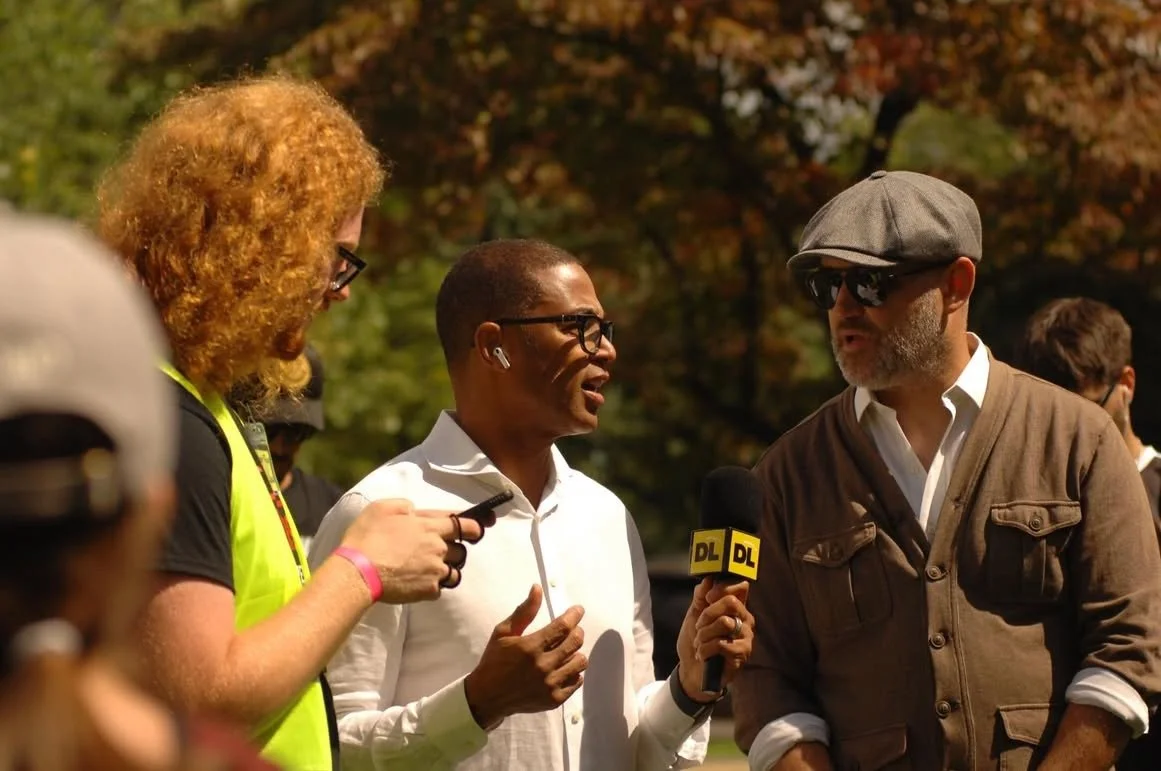
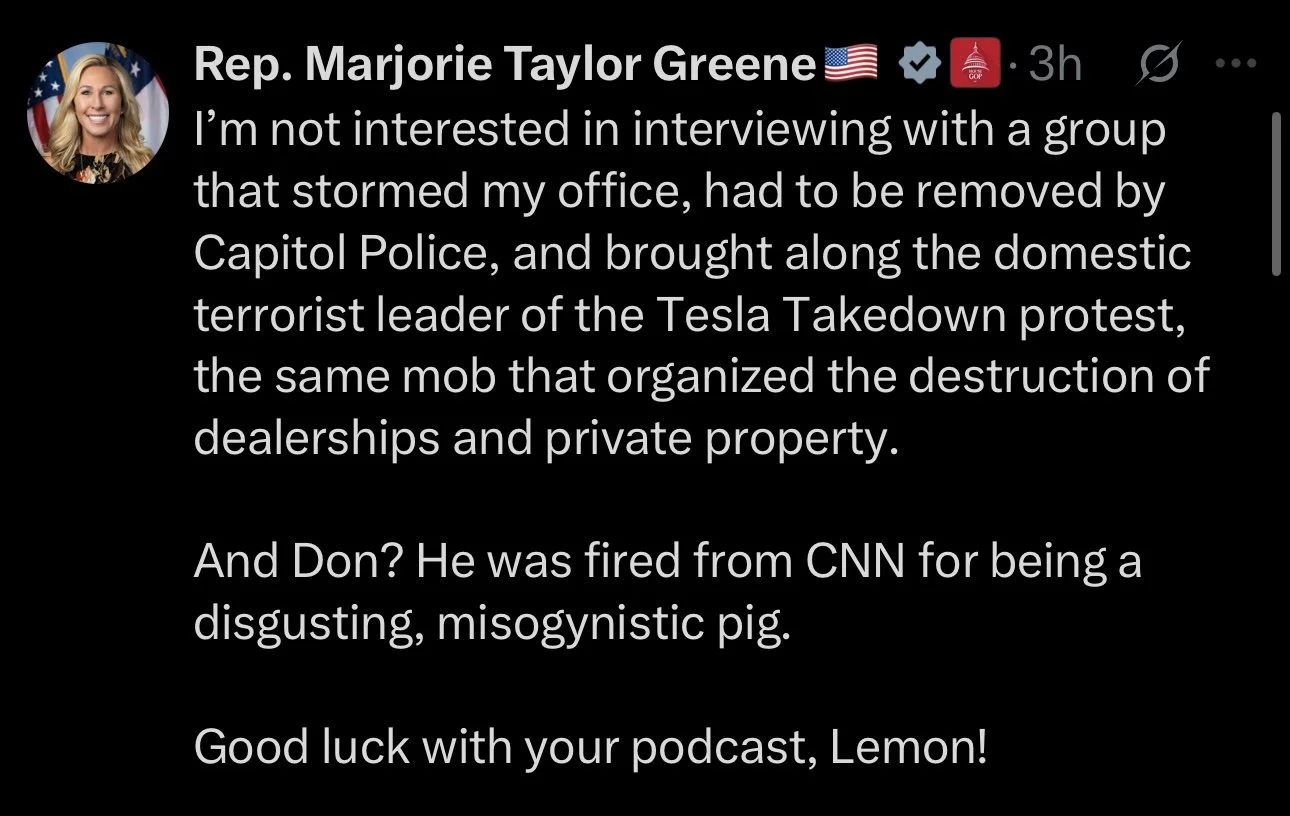
Since we generally don’t engage mainstream media, independent media has been essential to our efforts. With Don Lemon at the Capitol. (Photo: Jose Mejia, Owl Media)
Which brings us back to where we began: A Spanish correspondent flew to Minnesota. He found me outside a hotel where an evil coward was sleeping amid the tear gas of a protest that was about to be declared unlawful, kettled, and dispersed. We talked for a few minutes, and then the police line moved, and the conversation ended.
I didn't tell him, at the time, that I was scared. I was. The fear in Minneapolis that night was the fear of knowing how quickly the distance between a lawful protest and a state violence can collapse in a nation whose institutions have stopped defending that distance.
Many of the people closest to me have asked whether this work has been worth the price. I've given it all the money I had, face a consistent stream of criticism and death threats, and am physically, mentally, and spiritually exhausted.
But my answer is clear, both because I get to work alongside the best people I’ve ever met—both within my own organization and in the others that form the backbone of this movement—and because I answered that question for myself a long time ago, in a different country, living under an elected tyrant.
That I would never ignore reality because it was dangerous or inconvenient. That I would never allow fear to make my decisions for me. That I would always show up when freedom was at stake.
My name is Carlos Álvarez-Aranyos, and I’m the founder of American Opposition. I'm writing from the country I chose and I'm asking you—while understanding your fear, hopes, and exhaustion—not to forget to be brave.